
An under-stimulated indoor cat doesn’t just get bored; it gets destructive, overweight, or weirdly clingy at 4 a.m. The good news is that you don’t need a wall of expensive cat furniture to fix it. You can keep an indoor cat entertained for almost nothing using things you already own, a little daily routine, and an understanding of how cats actually like to play. This guide is built for renters and small-space owners on a budget, with real USD prices (most ideas are free or under $10) and no assumption that you have a spare room to turn into a cat playground.
Cats are ambush predators on a short battery. They want brief, intense bursts of hunting followed by long rests. Once you design play around that rhythm, it becomes easy and cheap to keep an indoor cat entertained without buying anything new every week.
Understand How Cats Actually Play
Every good cheap toy imitates prey. A wand with a feather mimics a bird; a ball that skitters mimics a mouse; a crinkly paper ball mimics leaves a rodent is hiding under. Cats are drawn to movement that darts, pauses, and hides, not movement that comes straight at them. When you drag a toy away from your cat and let it disappear behind a chair leg, you trigger the chase-pounce-catch sequence that leaves them satisfied. Understanding this one principle is what separates a toy your cat ignores from one it obsesses over.
Sessions should be short and end with a “catch.” Two or three five-minute hunts a day beat one long session, and finishing with a real treat or a bit of food mimics the natural hunt-eat-groom-sleep cycle, which is why a well-played cat naps hard afterward.
Free Toys Hiding in Your Recycling
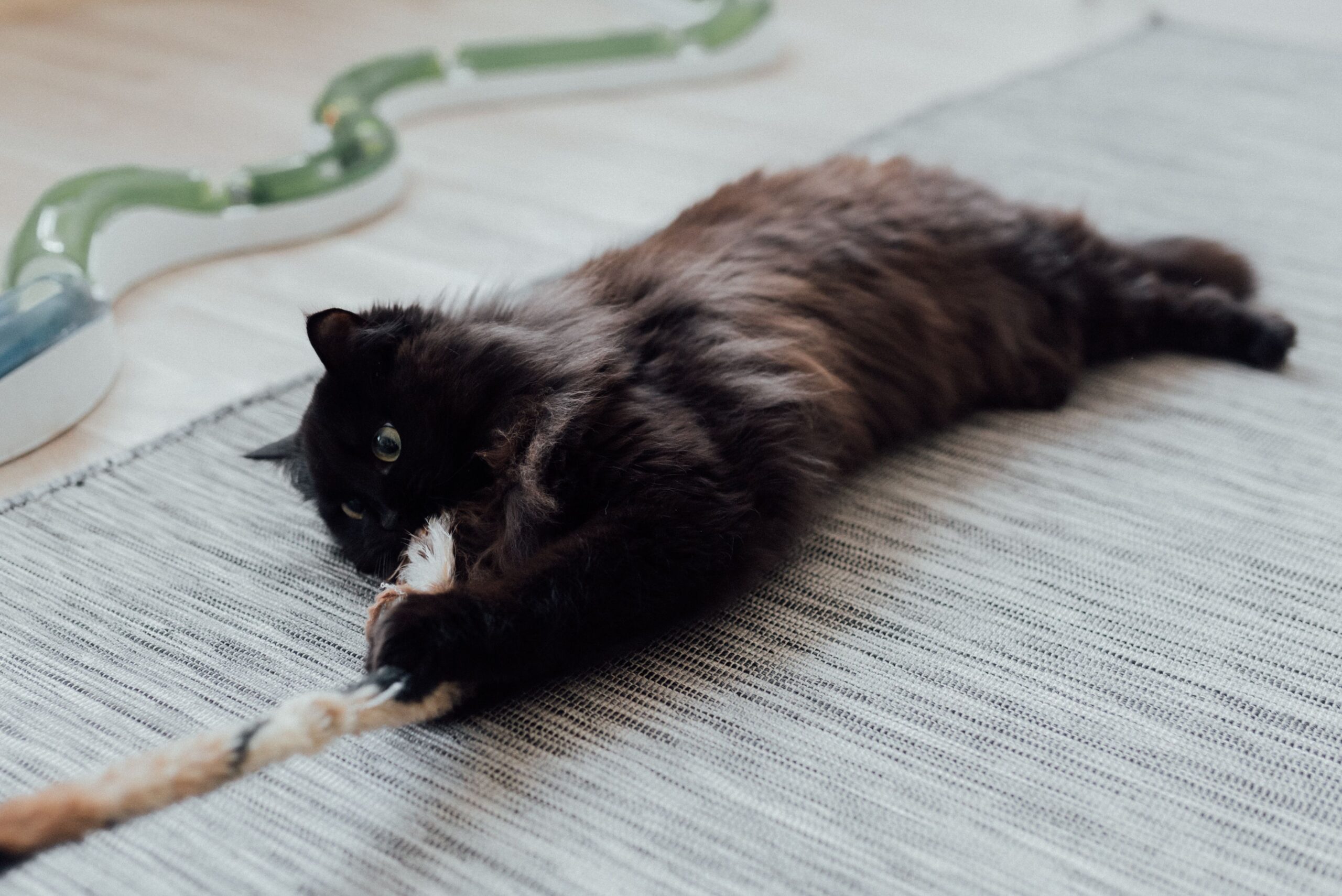
Before you spend a cent, raid your recycling bin. A cardboard box becomes a hide-and-pounce fort; cut a few paw-sized holes and it becomes a batting arcade. A toilet-paper tube pinched at both ends and filled with a few kibble pieces is a free puzzle feeder. A wine cork, a crumpled receipt, or a milk-jug ring all skitter beautifully across a hard floor. These cost nothing and, rotated in and out, keep novelty high, which is the real secret to keeping an indoor cat entertained on a budget.
Paper bags (handles removed for safety) are a favorite for a reason: the crinkle sound plus the hidden interior is irresistible ambush territory. Swap the specific items every few days so they feel new. If you want to go further with almost-free builds, our roundup of cheap cat toys has more no-cost ideas that use household scraps.
Rotate Toys to Fake Novelty
Cats habituate fast. A toy left out for two weeks becomes furniture. Divide whatever toys you have into two or three sets, keep one set out, and hide the rest in a drawer. Swap sets every few days. Suddenly the same five toys feel like fifteen, and you’ve spent nothing. This is the single most effective free trick to keep an indoor cat entertained, and it works even better if you store the hidden set with a little catnip so it comes back “seasoned.”
Keep a small basket for the active set so cleanup is a ten-second toss. A tidy rotation system also stops toys from scattering across a small apartment, which matters when your play space is also your living room.
Turn Mealtime Into a Hunt
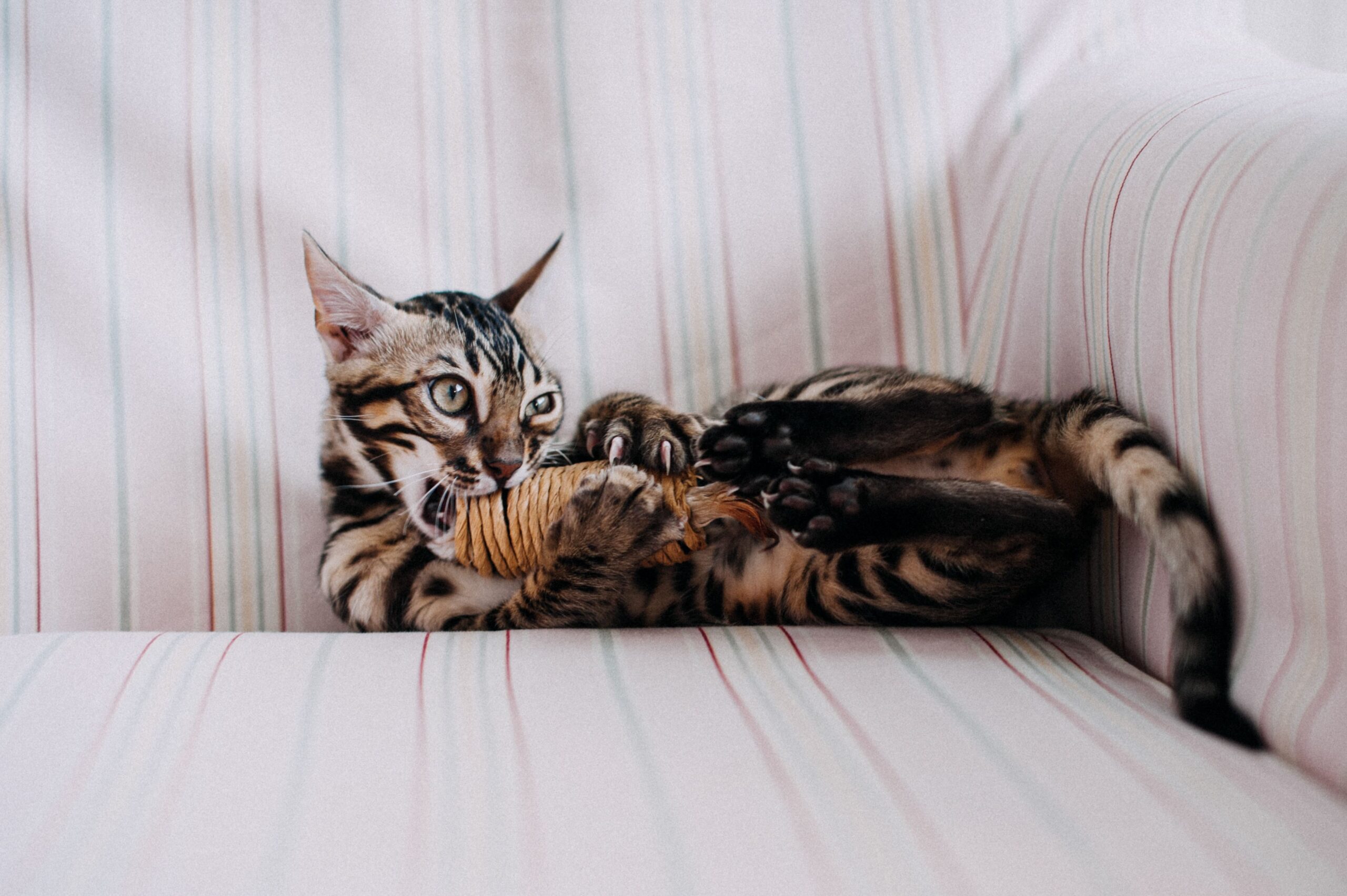
Free-feeding from a full bowl is the enemy of an entertained cat. Instead, make your cat work for food. Scatter dry kibble across the floor so it has to hunt each piece, or hide small portions around the room for a treasure hunt. A DIY puzzle feeder from an egg carton or a plastic bottle with holes cut in it turns a two-minute meal into fifteen minutes of problem-solving. Food puzzles engage the brain, and mental work tires a cat as much as physical play.
This approach also helps with weight, a real concern for indoor cats. Slowing down eating and adding movement burns calories and reduces the begging that comes from boredom rather than hunger. If food costs are on your mind too, our tips to save money on pet food pair well with a puzzle-feeding routine.
Build Vertical Space for Free
Cats feel safest and most entertained when they can climb and survey. You don’t need a $150 cat tree. Clear the top of a sturdy bookshelf, add a folded towel, and you’ve made a perch. A window with a view is the best free TV a cat can get; position furniture so your cat can reach the sill and watch birds and street activity for hours. If you want a step up from a bare sill, a simple cat window perch can be built cheaply and dramatically increases daily stimulation.
Even rearranging existing furniture to create a “cat highway” from floor to sofa to shelf gives an indoor cat a whole new territory to explore, at zero cost. Height equals confidence for cats, and a confident cat plays more.
Add Cheap Sensory Enrichment
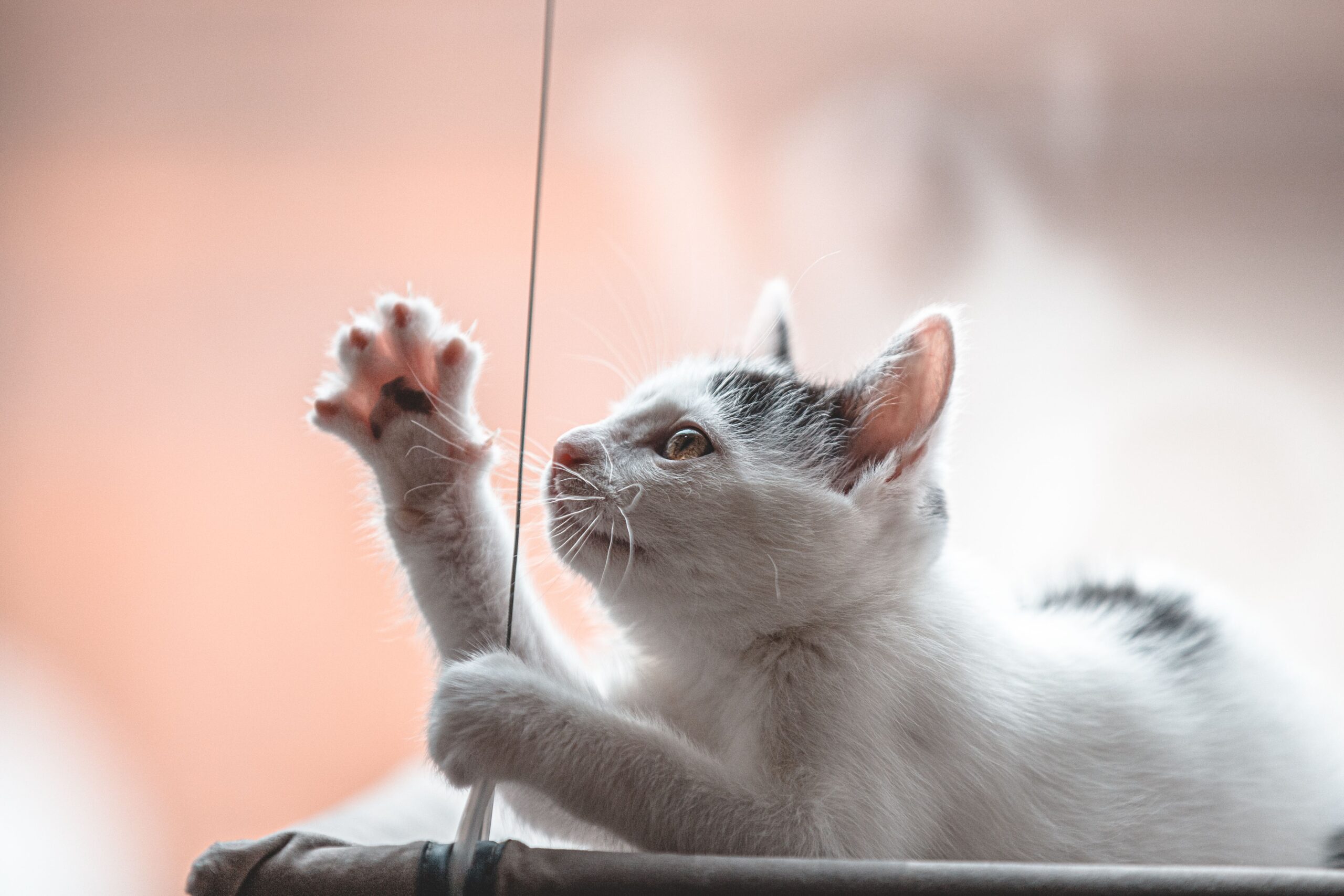
Beyond toys, cats crave sensory variety. A pot of cat grass ($3 to $5 in seeds) gives a safe thing to nibble. A pinch of dried catnip or silvervine revives an old toy instantly. Bird-and-squirrel videos on a tablet entertain many cats for a surprisingly long time and cost nothing if you already own a screen. Rotating scents, textures (a crinkly mat, a rough sisal square), and sounds keeps the environment interesting without new purchases.
Safety matters with all of this. Skip string, ribbon, and anything small enough to swallow when unsupervised, since linear objects can cause dangerous intestinal blockages. The ASPCA’s general cat care guidance is a good reference for safe play, and the Humane Society’s tips on indoor enrichment go deeper on environmental needs.
Make a Simple Daily Routine
Cats thrive on rhythm. A predictable routine is what turns scattered effort into a genuinely enriched life, and it’s the framework that ties every cheap idea together. Try this free template: a five-minute wand hunt before your breakfast, scatter-feed a portion of the day’s food at midday, rotate the toy set every few days, and finish with an evening play session that ends in a real meal right before you sleep. That last one is the trick that stops the 4 a.m. wake-up calls, because a cat that hunts and eats at night sleeps at night.
You’ll know it’s working when your cat starts anticipating play, sleeping more soundly, and pestering you less for random attention. None of it requires spending money; it requires a few minutes of your day and a bit of understanding of what your cat is wired to want.
Multi-Cat and Solo-Cat Tweaks
Your setup should match your household. A single cat with no feline company relies on you for social play, so schedule your interactive sessions at consistent times and lean harder on window views and food puzzles for the hours you’re out. Boredom hits solo cats hardest, and a lonely cat is the one most likely to overeat or wake you at night. In a multi-cat home, competition can either help or hurt; some cats chase and wrestle happily, while others need separate hunting zones so a bolder cat doesn’t hog every toy. Watch for one cat guarding the puzzle feeder and set out a second station a room apart if needed.
Kittens and senior cats also want different things. Kittens need more frequent, shorter bursts to avoid overstimulation, while older cats appreciate gentler ground-level wand play and easy-access perches with a step up. Adjusting the same cheap tools to your cat’s age is what makes the routine sustainable for years, not just weeks.
Cheap Buys Worth Making
If you do want to spend a little, spend it well. A basic wand toy ($3 to $6) is the highest-value purchase for interactive hunting. A packet of catnip ($4) revives everything you own. A simple treat ball ($6 to $8) covers puzzle feeding on days you’re short on time. That’s a complete kit for under $20 that will keep an indoor cat entertained for months, especially combined with the free ideas above.
The goal isn’t a cabinet full of gadgets; it’s a small, well-rotated set plus a daily routine. Keep it simple, keep it novel, and your indoor cat will be calmer, fitter, and far better company, all without straining your budget.
Fernanda Amaral writes about making small homes work for pets and their humans — apartment-friendly setups, budget care and organization that actually fits. She shares practical tips tested in real small spaces.