
It was pouring for the third day straight when I first realized my rescue mutt, Pepper, had started chewing the corner of the couch out of sheer boredom. We live on the fourth floor of a walk-up with no yard, no balcony, and a downstairs neighbor who works nights. A proper walk wasn’t happening, and Pepper was climbing the walls. That week forced me to get good at burning a dog’s energy without ever leaving the living room.
If you’re in a similar spot, take heart: you can absolutely exercise a dog indoors, and it doesn’t require a lot of space or gear. What it takes is a little creativity and a handful of go-to games you can rotate. Below is everything that has kept Pepper happy, tired, and off the furniture, even during the longest stretches of bad weather.
Why indoor exercise matters more than people think
A dog that doesn’t burn energy finds its own outlets, and they’re rarely ones you’ll like: chewing, barking, pacing, digging at the carpet. The problem isn’t a bad dog, it’s an under-stimulated one. Physical movement and mental work both drain the tank, and indoors you’ll lean a little harder on the mental side to make up for the smaller space.
The AVMA’s pet care resources stress that daily activity is tied directly to a dog’s physical and behavioral health. The good news is that fifteen focused minutes of the right game can tire a dog more than a slow half-hour amble around the block.
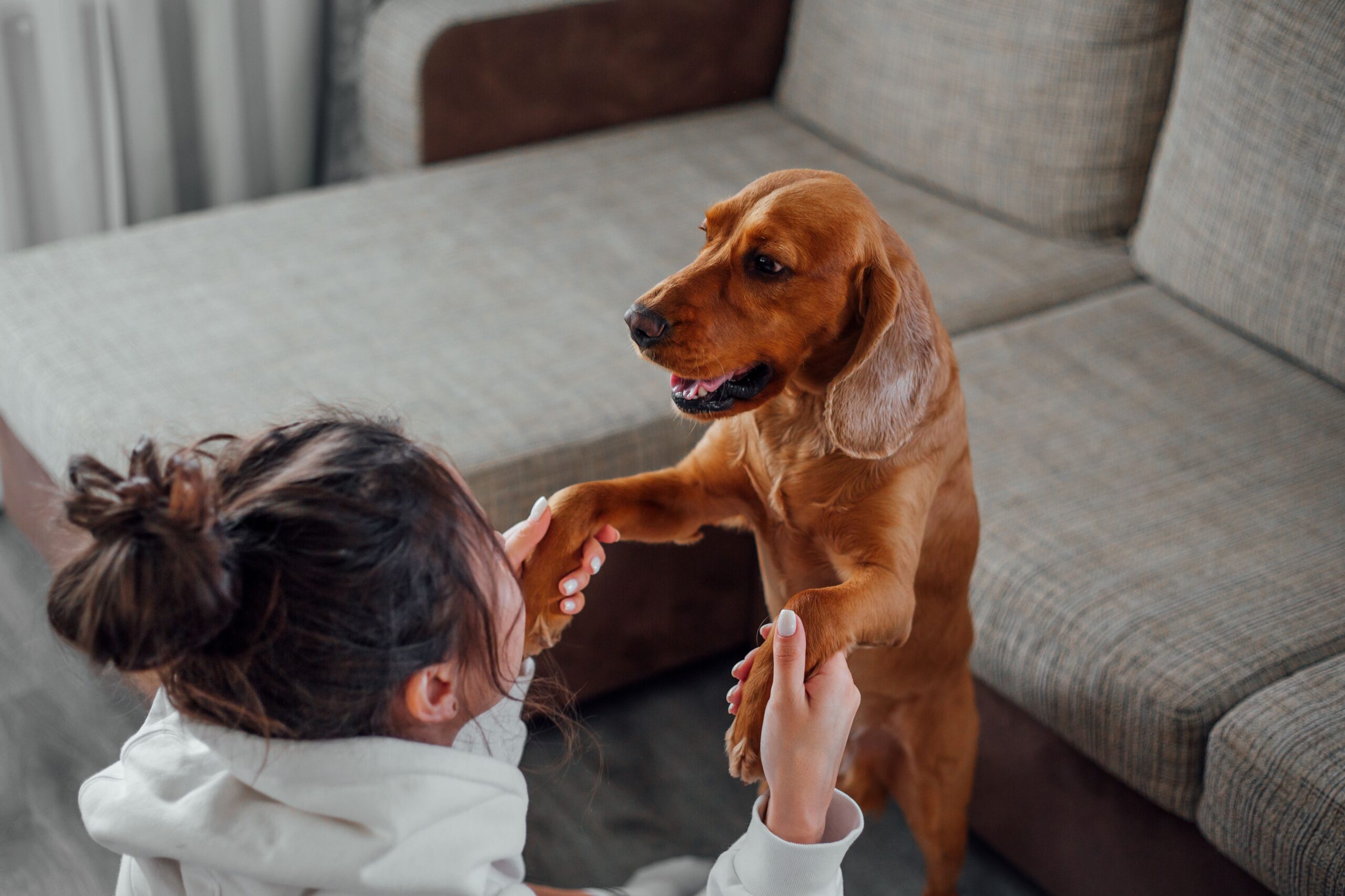
Hallway fetch and the stair sprint
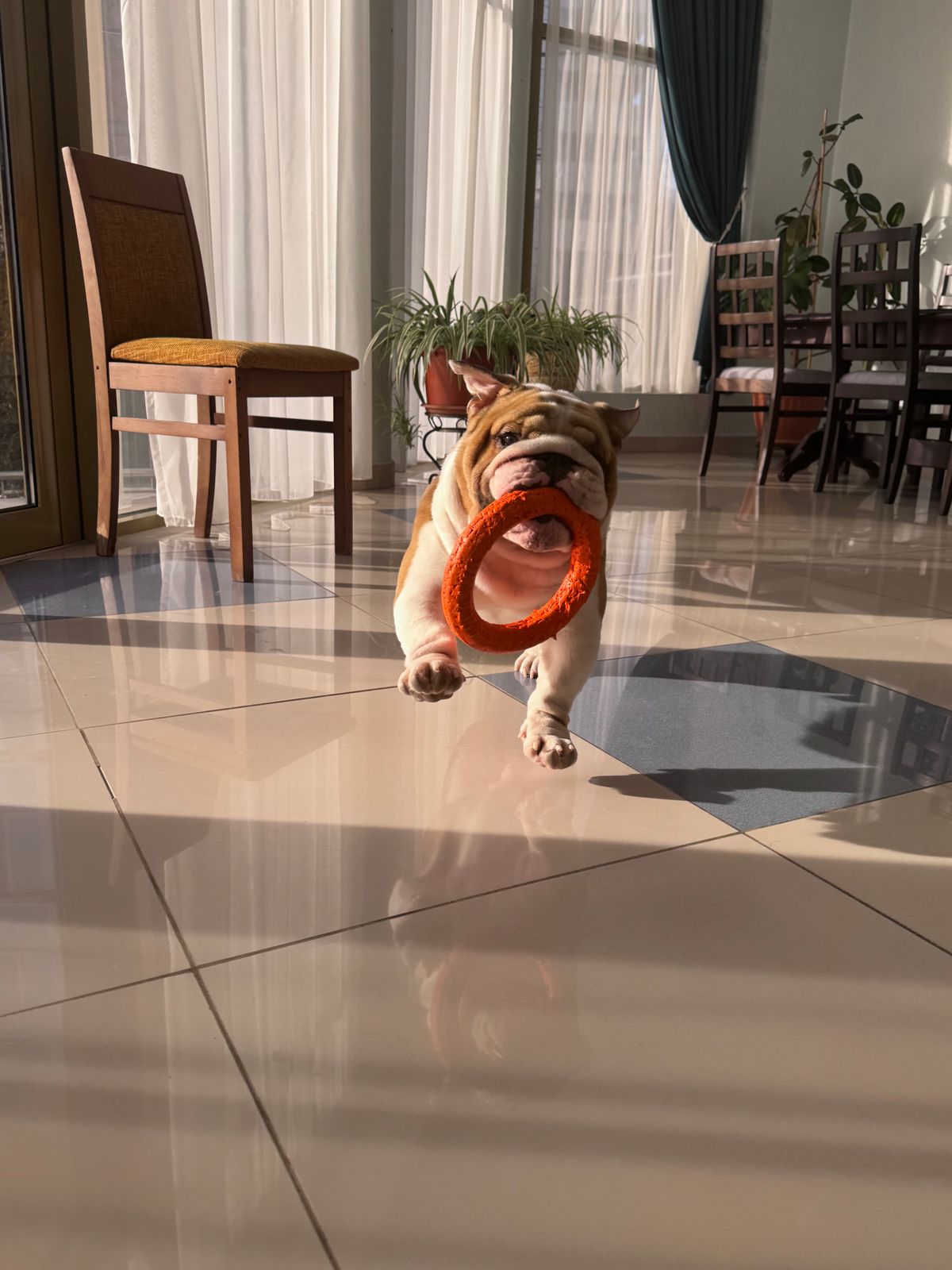
The simplest way to exercise a dog indoors is to turn your longest straight line into a runway. My hallway is only about 20 feet, but rolling a ball down it and having Pepper bring it back a dozen times gets her panting fast. Use a soft ball so nothing gets broken and your neighbors don’t hear thundering paws.
If you have an internal staircase or access to one in the building, controlled stair work is gold. Toss a toy up a few steps, let the dog fetch it, repeat. Stairs add resistance, so ten minutes goes a long way. Skip this one for puppies under a year or dogs with joint issues, since the impact is hard on developing bodies.
Tug, flirt poles, and games that build muscle
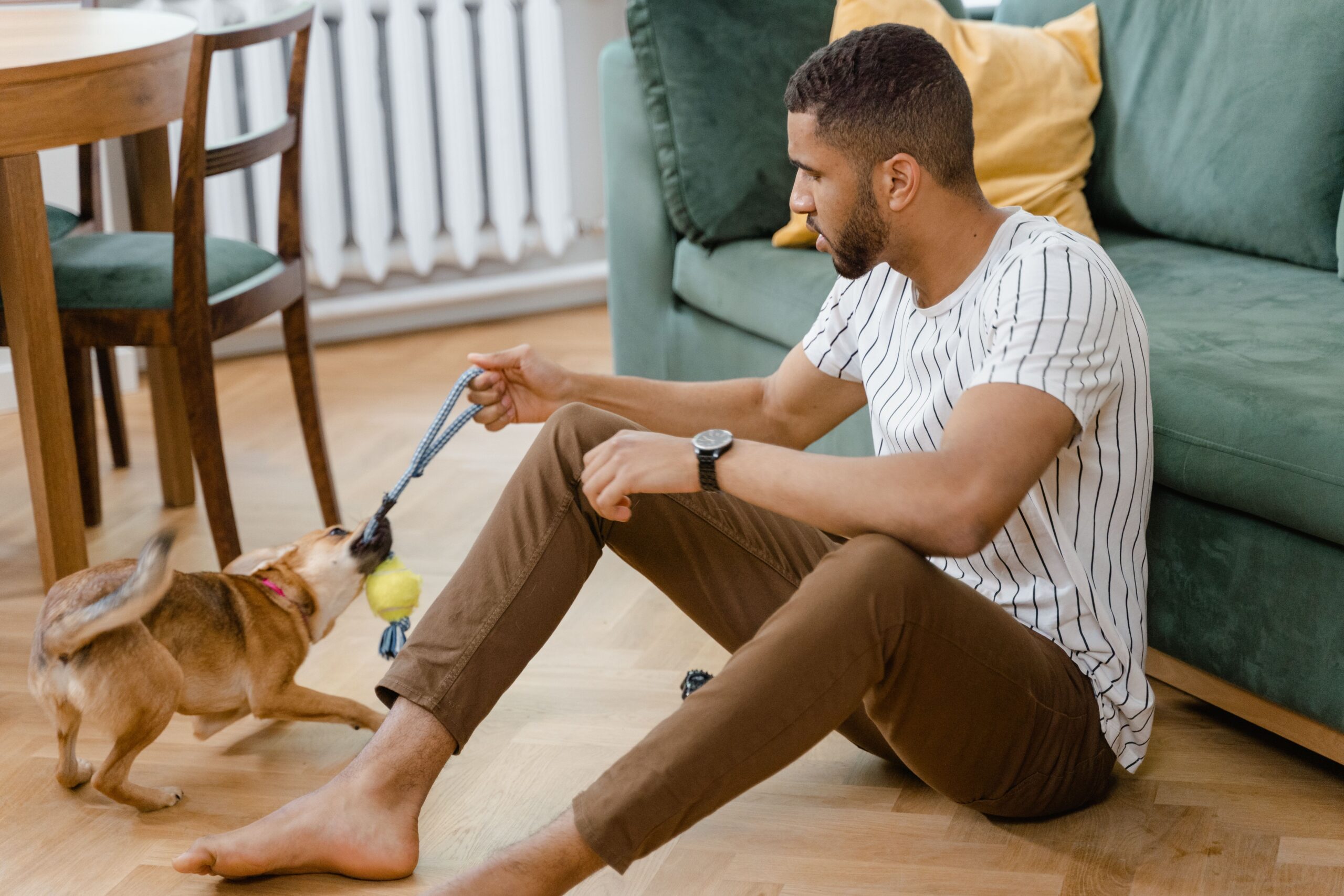
Tug of war is criminally underrated. A $12 rope toy and five minutes of enthusiastic pulling works a dog’s whole body, and contrary to old myths, letting your dog win doesn’t make them aggressive. For an even bigger burn in a tight space, a flirt pole, basically a big cat wand for dogs, lets them chase and pounce in a small circle.
These games double as training. Ask for a “sit” or “drop it” between rounds and you’re layering obedience onto exercise. That mental effort is why a dog flops down satisfied afterward instead of pestering you for more.
Match the game to your dog’s size and age
Not every game suits every dog, and the right match is what makes indoor time actually work. A high-drive young Lab needs the flirt pole and hallway sprints, while a senior or a flat-faced breed like a pug will overheat fast and does better with sniffing games and gentle tug. When you exercise a dog indoors, watch the breathing: a happy pant is fine, but heavy wheezing means it is time to stop.
Small dogs are perfect candidates for apartment exercise because a 15-foot hallway is a full sprint for them. Big dogs need you to be smarter, leaning on stairs, tug, and mental work rather than distance. Whatever the size, end each session on a calm note so your dog learns that play winds down rather than spiraling into overexcitement.
Make the brain do the heavy lifting
When you can’t move a dog’s body much, move its mind. Mental work is the secret weapon of small-space owners, and it tires a dog out shockingly fast. My favorite low-effort options are:
- Snuffle mats — scatter kibble in a fabric mat and let the nose do the work ($15 to $25, or DIY one for free).
- Puzzle feeders — turn a meal into a ten-minute problem-solving session.
- The “find it” game — hide treats around the room and send your dog searching.
- Frozen stuffed toys — pack a rubber toy with wet food and freeze it for a 20-minute focus session.
- Trick training — five minutes of learning “spin” or “shake” is real cognitive exercise.
Rotate these so they stay novel. A puzzle your dog has memorized isn’t a puzzle anymore, so keep two or three in circulation and swap weekly.
Build a simple daily rhythm
Dogs thrive on routine, so I split activity into small chunks instead of one big session. A short morning game before work, a puzzle feeder at lunch if I’m home, and a proper play session in the evening keeps Pepper on an even keel all day. If you want a full routine template, my beginner’s guide to keeping a dog in a small apartment breaks down a realistic daily schedule.
Consistency beats intensity. Three ten-minute bursts spread across the day will do more for behavior than one exhausting hour followed by nothing. And on days you’re truly slammed, even a five-minute snuffle mat counts.
Weather makes this routine non-negotiable rather than optional. On the rainy or freezing days when a real walk is off the table, your indoor games are the whole plan, so it helps to have them ready to go rather than improvising while your dog stares at you. I keep a written shortlist on the fridge: fetch, tug, snuffle, puzzle, trick session. When you can exercise a dog indoors on autopilot, bad weather stops being a crisis and becomes just another Tuesday.
Protect your space (and your deposit)
Active play indoors means the occasional knocked-over lamp, so do a ten-second sweep before you start: move fragile stuff, roll up the good rug, and pick a room with a bit of open floor. A cheap foam mat or a washable area rug gives traction so your dog isn’t sliding into walls on hardwood.
If noise is your worry, stick to soft toys and schedule the bounciest games for daytime hours. For gear storage between sessions, a single bin by the door keeps toys corralled; my post on small apartment pet storage solutions has more ways to keep it all tidy, and the IKEA hacks for pet owners guide has a few clever spots to stash it.
How to tell if it is actually working
The real test is your dog’s behavior in the hours after play. A well-exercised dog settles, naps, and stops seeking trouble. If yours is still restless, pacing, or destructive despite your best efforts, that is a signal to add a session or lean harder on mental games rather than physical ones.
Keep a loose mental log for the first week or two. Note which games leave your dog most content and which barely make a dent, then build your rotation around the winners. Every dog is different, and part of learning to exercise a dog indoors is figuring out your specific dog’s off switch. Once you find it, the whole apartment gets calmer.
Your next step
Pick one game from this list and try it tonight, before the next rainy stretch catches you off guard. Learning to exercise a dog indoors changed life in our little walk-up completely, and the couch corner has been safe ever since. Start with a rope toy or a snuffle mat, watch how fast your dog settles afterward, and build your rotation from there. Within a week or two you will have a handful of reliable games that fit your space, your schedule, and your dog’s personality, and the days when you cannot get outside will stop feeling like a problem at all.
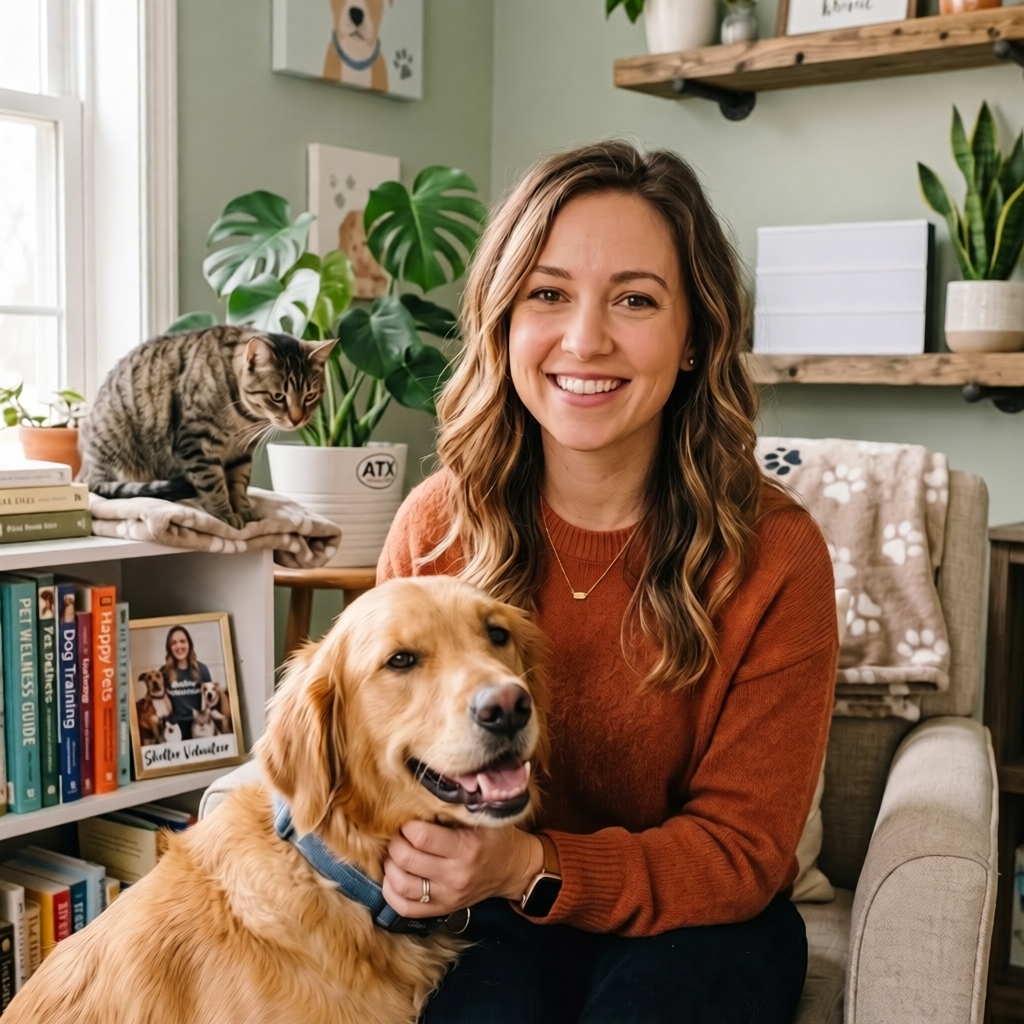
Fernanda Amaral writes about making small homes work for pets and their humans — apartment-friendly setups, budget care and organization that actually fits. She shares practical tips tested in real small spaces.