
My first week working from home, my dog Biscuit body-slammed my office chair during a video call with my boss, and my cat walked across the keyboard and muted me mid-sentence. I laughed it off, but by day three the novelty had worn thin and I realized I needed an actual plan. My apartment was small, my desk was in the corner of the living room, and my pets clearly considered it their space too.
A year later, working from home with pets is genuinely one of my favorite things, but only because I set up our shared space thoughtfully. If you are juggling deadlines and a needy animal in a tight apartment, this guide covers how to build a home office that works for both of you, without banishing your pet to another room.
Give your pet their own spot in your office
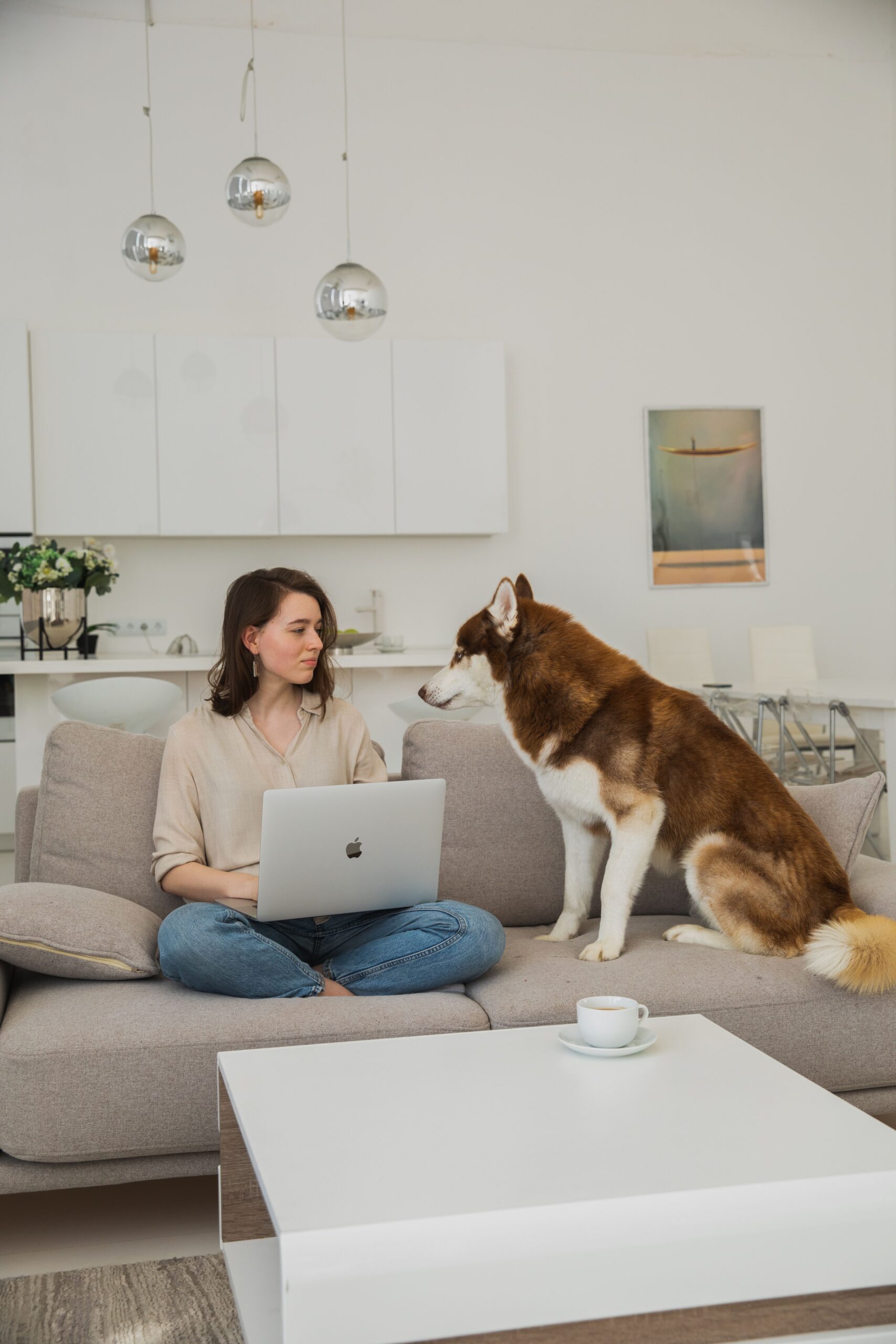
The single biggest fix is giving your pet a designated place right in your workspace. A dog bed beside your desk or a cat perch nearby tells them they belong there, which dramatically cuts the attention-seeking behavior. Pets act up most when they feel excluded, so inclusion is the whole trick.
Place their spot within your eyeline but just outside your immediate work zone. When working from home with pets, this simple boundary lets them feel close to you while keeping them off your keyboard and out of your lap during calls.
Structure the day around their needs
Most pet disruptions happen because an animal has energy to burn or a need going unmet. Front-load a walk or a play session before you start work, and your pet will happily nap through your busiest morning hours. Schedule short breaks that double as pet time.
A predictable routine is calming for animals, and the AVMA’s pet care resources note that consistent daily activity supports both behavior and health. Feed, walk, and play at consistent times, and your pet learns when to expect your attention, which means less pestering while you focus. Working from home with pets goes far smoother when their day has a rhythm.
Pet-proof your workspace
A few tweaks save your gear and your sanity. Here’s my essential checklist:
- Manage cables — bundle and hide cords so they aren’t chew toys or tripping hazards.
- Secure your coffee — a spill-proof mug survives the inevitable tail swipe.
- Protect your chair — a throw blanket saves upholstery from fur and claws.
- Stash a toy bin — a quick distraction within arm’s reach during a call.
- Add a lint roller — for the fur that will end up on you before every meeting.
These small preparations turn potential disasters into non-events, which matters most when the camera is on.
Do not overlook the floor around your feet, either, since that is prime territory for a napping dog or a toy-hoarding cat. Keep the area under and beside your desk clear enough that you can roll your chair without running over a paw or a tail. A small rug there gives your pet a defined, comfortable spot and saves your hard floors from claw marks at the same time.
Protect your own focus and wellbeing
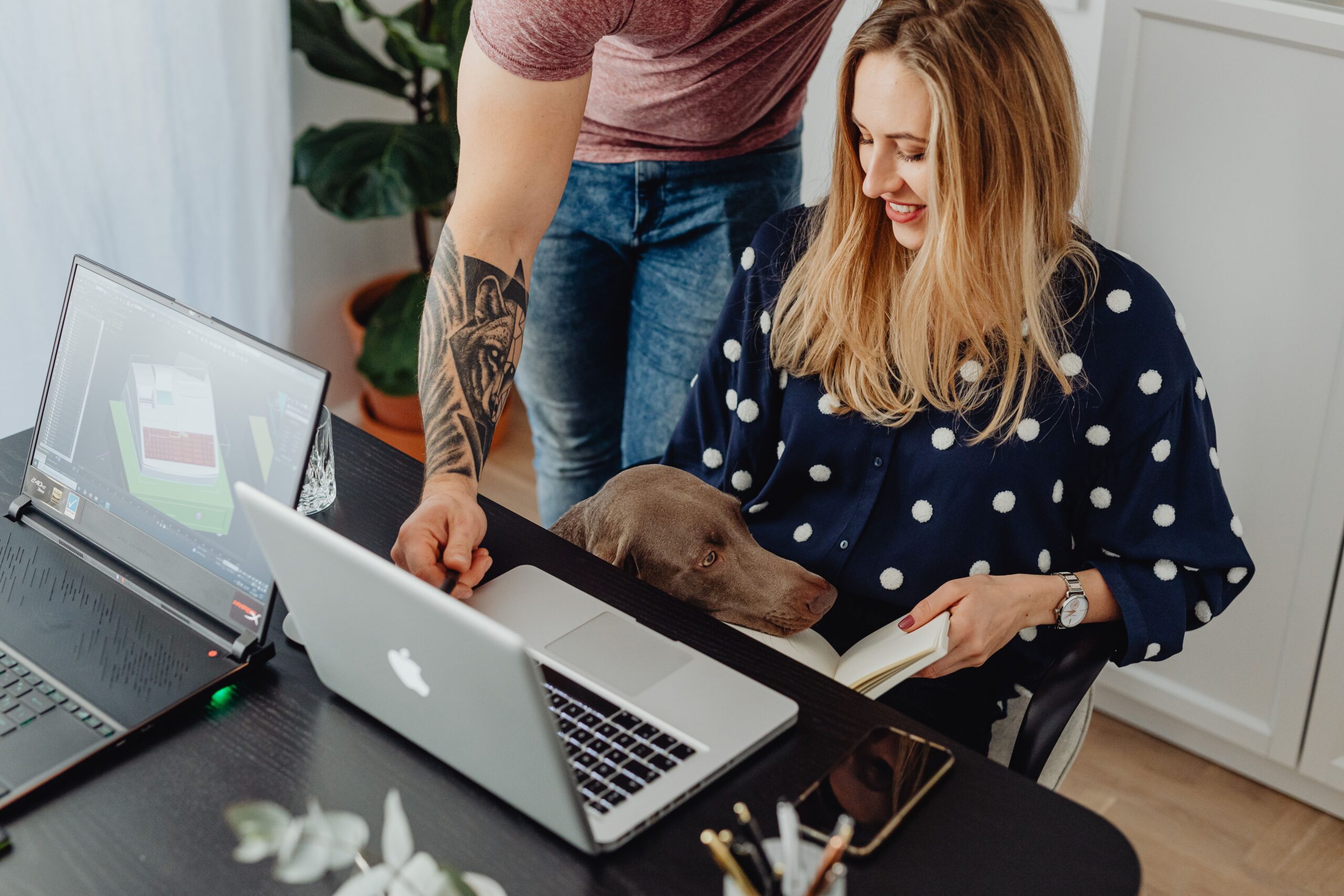
It is easy to focus entirely on managing the pet and forget that your own focus matters just as much. Constant interruptions fracture your concentration, so protect deep-work blocks by scheduling them right after a walk or feeding, when your pet is most likely to sleep. Noise-canceling headphones help you tune out a restless animal during a crunch without shutting them out of the room.
There is a genuine upside here, too. Having a pet nearby is a proven stress reducer, and a quick two-minute cuddle between tasks can reset a frazzled brain better than another cup of coffee. The point of working from home with pets is not to eliminate their presence but to channel it, so it becomes a source of calm rather than chaos across your day.
Handle video calls gracefully
Calls are the highest-stakes moments. Right before one, give your pet a long-lasting treat or a stuffed puzzle toy to keep them busy and quiet. Position your camera so a wandering cat or barking dog stays out of frame, and keep the mute button close.
Honestly, most colleagues love the occasional pet cameo, so do not stress too much. For keeping a dog calm and quiet during the workday, my post on how to exercise a dog indoors is the perfect companion to this one.
Set boundaries without banishment
You can teach a pet that “on the bed” means quiet time without ever locking them away. Reward them for settling in their spot, and gently redirect them back when they wander over mid-task. Consistency, not punishment, is what makes it stick.
A baby gate or a pet-friendly room divider can create a soft boundary in a studio without making anyone feel shut out. The goal is a shared space with understood rules, not a closed door.
Timing your firmest boundaries to your hardest hours works better than enforcing rules all day long. Let your pet have free run during light-admin stretches, then cue quiet time when a big call or deep-focus block arrives. Pets pick up on these patterns quickly, and a flexible approach feels fair to them while still protecting the moments when you truly cannot be interrupted.
Make the space work for a tiny apartment
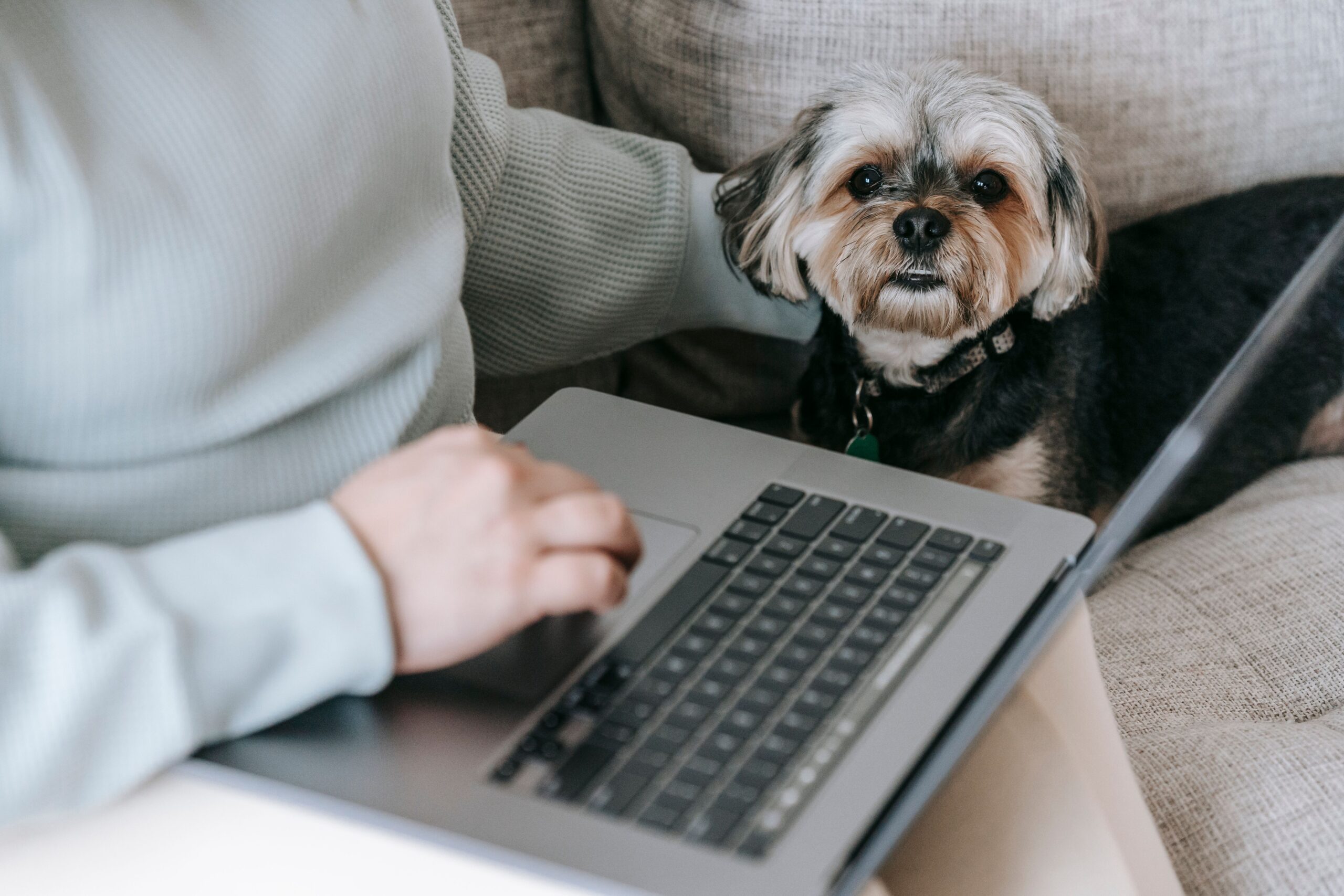
In a small home your office and your pet’s world overlap completely, so lean into vertical storage and multi-use furniture. A desk with a pet bed tucked underneath, or a shelf that holds both your files and the cat, makes every inch count.
For more ideas on carving out zones in a tight space, my guide to small apartment pet storage solutions helps keep the shared area tidy and functional.
Different pets, different setups
A dog and a cat will pull your workspace in slightly different directions, so tailor the setup to who you live with. Dogs tend to need more scheduled physical activity and clearer verbal cues, so a solid morning walk and a comfy floor bed do most of the heavy lifting. They also respond well to a predictable start-and-stop signal, like closing your laptop, that tells them the workday is done and playtime is back.
Cats, on the other hand, want vertical options and warm surfaces, which is why a perch or a heated pad near your desk often keeps them contented and off your keyboard. If you share your home with both, give each their own zone so they are not competing for the prime spot beside you. Getting the details right for your specific animals is what makes working from home with pets sustainable month after month, not just for the first exciting week.
Your next step
Set up one thing today: put a comfortable pet bed right next to your desk and reward your pet for using it. Working from home with pets went from chaotic to genuinely lovely for me once I stopped fighting their presence and designed around it instead. Build the routine and boundaries over the coming weeks, and you’ll have the best coworkers you have ever had. Give it a couple of weeks of gentle consistency and the whole rhythm becomes second nature, leaving you with a workspace that actually feels better because your pet is in it, not despite it.
Related reading
Fernanda Amaral writes about making small homes work for pets and their humans — apartment-friendly setups, budget care and organization that actually fits. She shares practical tips tested in real small spaces.