
The day I brought my first kitten home, I felt ready. I had the food, the litter box, the little jingly toys. Then within an hour she had wedged herself behind the refrigerator, chewed the corner of a phone charger, and taken a very serious interest in the gap under the balcony door. That afternoon taught me that apartment pet-proofing is not optional, and that bringing a pet into a rental is less about the fun supplies and more about seeing your home the way a curious animal does, at ankle height, with a taste for anything dangling.
If you are a first-time owner, apartment pet-proofing is the single most useful hour you can spend before your new companion arrives. A small space is actually easier to secure than a house, but the hazards sit closer together, so one overlooked cord or open cabinet matters more. This is the exact checklist I now run through in every place I move into, room by room.
Start by getting on their level
Before you buy a single gadget, do the crawl. Get down on your hands and knees in each room and look at what is reachable, chewable, or hide-able from a pet’s point of view. Good apartment pet-proofing always starts with this, because you will spot things standing up that you would never notice from five feet in the air, like the tempting fringe of a rug or the wobbly floor lamp.

Make a note of every dangling cord, low shelf, and tight gap as you go. In my experience the trouble spots are almost always the same: charging cables, blind cords, the space behind appliances, and anything small enough to swallow. Once you can see the room the way your pet will, the rest of the checklist falls into place.
The living room and cords
The living room is cord central, and cords are the number one hazard first-time owners underestimate. Bundle loose cables into a cheap fabric sleeve ($8 to $12), tape runs along the baseboard, and lift phone chargers off the floor. Blind and curtain cords deserve special attention: tie them up high or switch to a cordless option, because a looped cord is a strangulation risk for a playful cat or a small dog.
Wobbly furniture is the other quiet danger. A bookshelf or floor lamp that a person would only nudge can topple under a climbing cat. Anti-tip straps cost a few dollars and use adhesive anchors, so they will not upset a landlord. This part of apartment pet-proofing takes ten minutes and prevents the scariest kind of accident.
The kitchen and bathroom
These two rooms hold most of the poisons in your home. Under-sink cabinets are full of cleaners, so add childproof latches ($6 for a pack) to any door a paw can pry open. Keep the trash behind a closed door or use a lidded can, because dogs especially treat the bin as a buffet, and cooked bones or wrappers can be deadly.

In the bathroom, keep the toilet lid down, stash medications in a high cabinet, and be careful with essential oils, many of which are toxic to cats. Houseplants belong on this list too. Lilies, pothos, and sago palm are common and dangerous, so check every plant against a reliable list before your pet arrives.
Windows, balconies, and escape routes
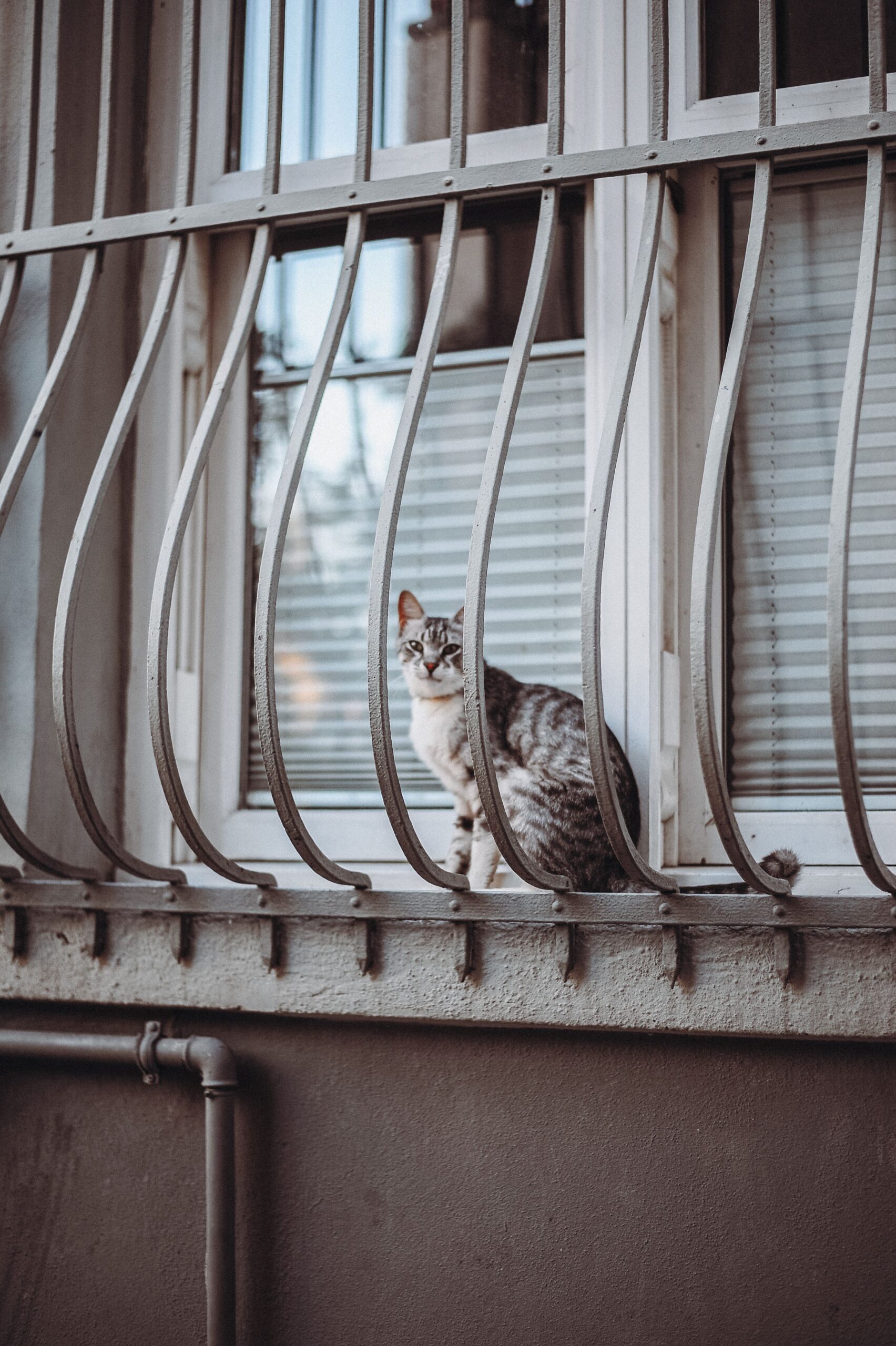
Small apartments often mean high floors, and that changes the stakes. Cats will push against a loose screen chasing a bird, and “high-rise syndrome” is a real veterinary emergency. Make sure every screen is snug and secure, and never rely on one to hold an animal’s weight. Thorough apartment pet-proofing treats every open window as a potential exit.
Balconies need railings a pet cannot slip through or jump over; garden netting zip-tied along the rail is a renter-friendly fix. And check your front door habits, since a fast dog or a bolting cat can slip out when you are juggling groceries. A baby gate in the entry hallway buys you a crucial second.
Your quick apartment pet-proofing checklist
Once you have walked the rooms, here is the run-through I keep on my phone and tick off before the pet comes home:
- Cords: bundled, taped down, or lifted out of reach.
- Cabinets: cleaners and meds latched or moved up high.
- Trash: lidded or behind a closed door.
- Plants: every one checked against a toxic-plant list.
- Windows & screens: secure, with balconies netted.
- Small objects: hair ties, coins, and buttons off the floor.
- Furniture: tall pieces anchored with anti-tip straps.
Keep your vet’s number and the ASPCA Animal Poison Control line saved somewhere you can find in a panic. Knowing who to call turns a frightening moment into a manageable one, and it is a free part of good apartment pet-proofing.
Bedroom, closets, and the small stuff
Bedrooms feel safe, but they hide plenty of small hazards. Hair ties, earrings, coins, and buttons are exactly the size a curious pet will swallow, and a string of dental floss can cause a life-threatening intestinal blockage. Sweep the nightstand and floor, and keep laundry off the ground since socks are a classic emergency-vet story.
Closet doors that do not latch are another overlooked gap in apartment pet-proofing. A kitten will happily disappear into the back of a wardrobe or climb a stack of shelves, so add a simple hook-and-eye latch if the door drifts open. Mothballs and shoe treatments in closets are toxic too, so move anything chemical to a high shelf your pet cannot reach.
Give them a safe zone of their own
Pet-proofing is not only about removing danger; it is also about adding safety. Set up one calm corner with a bed, water, and a familiar-smelling toy where your pet can retreat when the apartment feels overwhelming. New animals often hide for the first few days, and giving them a designated hideaway means they choose a spot you have already made safe instead of the gap behind the stove.
A covered crate for a dog or a cardboard box turned on its side for a cat works perfectly and costs nothing. I like to place the safe zone away from the front door and any loud appliances, so it stays a genuine refuge. This small step does as much for a nervous pet’s wellbeing as any latch or cord sleeve.
Common mistakes first-time owners make
The biggest mistake I see is treating apartment pet-proofing as a one-day project and then forgetting it. Pets grow, get bolder, and learn to jump higher, so a counter that was safe for a kitten becomes a launchpad for a full-grown cat. Revisit the riskier rooms every couple of weeks, especially in the first few months while your pet is still testing boundaries.
Another frequent slip is assuming a small dog cannot reach the counter or the trash. Determined small breeds are astonishing climbers, and a wagging tail can sweep a mug off a coffee table in seconds. Do not rely on height alone to keep things out of reach; if it is dangerous, put it behind a closed door.
Finally, many first-timers over-buy gadgets and under-invest in supervision. No amount of latches replaces simply watching your new pet closely for the first week. Gear buys you a safety margin, but your attention is what actually keeps them out of trouble while they learn the ropes of their new home.
Settling in together
No home is ever perfectly hazard-free, and you will keep noticing new things in the first week as you watch how your pet actually moves through the space. That is normal. Apartment pet-proofing is a habit more than a one-time event, and a quick weekly glance keeps you ahead of trouble.
Start with the crawl this weekend, fix the cords and cabinets first, and add the rest over a few evenings. Do that, and you will spend those precious first days enjoying your new friend instead of chasing them away from the one outlet you forgot.
Related reading
- The Realistic Guide to Litter Box Placement in a Small Apartment
- How to Manage Dog Barking in a Thin-Walled Apartment
- Two Cats in a Small Apartment: What Actually Works

Fernanda Amaral writes about making small homes work for pets and their humans — apartment-friendly setups, budget care and organization that actually fits. She shares practical tips tested in real small spaces.