
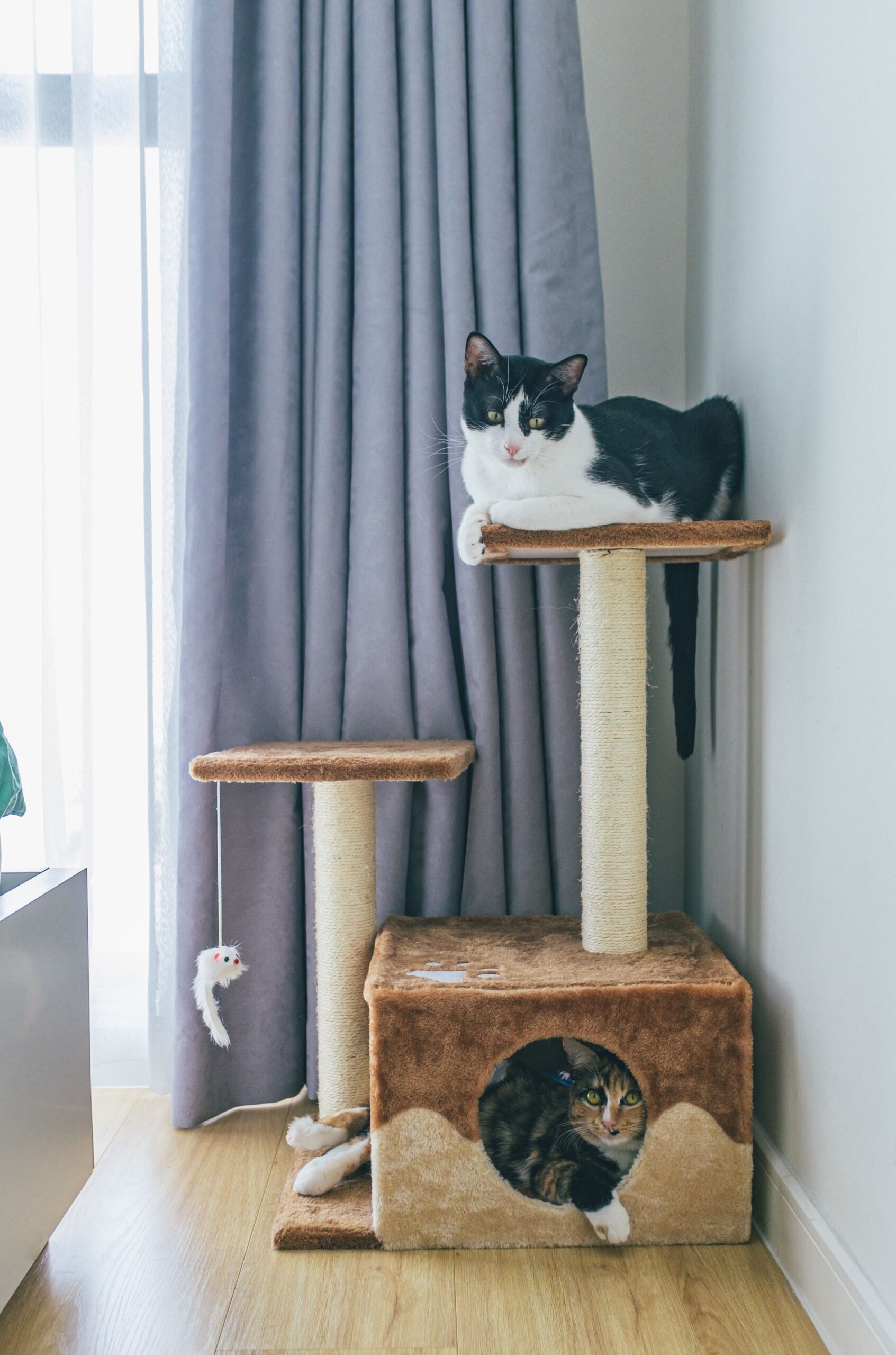
I still remember standing in a pet store holding a price tag for a cat tree that cost more than my monthly grocery budget. It was carpeted, three tiers tall, and honestly kind of ugly, and I could not justify it in a one-bedroom apartment where every square foot already had a job. So I put it back, went home, and started figuring out how to give my cat the same perch, scratch, and nap options for a fraction of the price. That is when I fell down the rabbit hole of budget pet furniture, and I have never looked back.
Here is the honest truth: most expensive pet furniture is marked up because it is marketed to us, not designed for our pets. Animals do not care about brand names or matching your decor; they care about a soft spot to sleep, something to climb, and a surface they are allowed to shred. Once you understand what your pet actually wants, budget pet furniture becomes easy, and often looks better in a small space than the store-bought stuff.
What you are really paying for
Before you swap anything out, it helps to see where the money goes. A $200 cat tower and a $30 shelf setup offer your cat almost the same thing: height, a lookout, and a scratchable post. The extra cost usually buys carpet, packaging, and a name, not extra happiness for the animal. When I started evaluating budget pet furniture by function instead of price, the savings were obvious.
The same goes for dog beds. A memory-foam orthopedic bed can run $120, but the therapeutic part is just the foam, which you can buy as an offcut for $20 and slip into a washable cover. Paying attention to the actual materials, rather than the label, is the whole game.
Thrift stores and marketplace finds
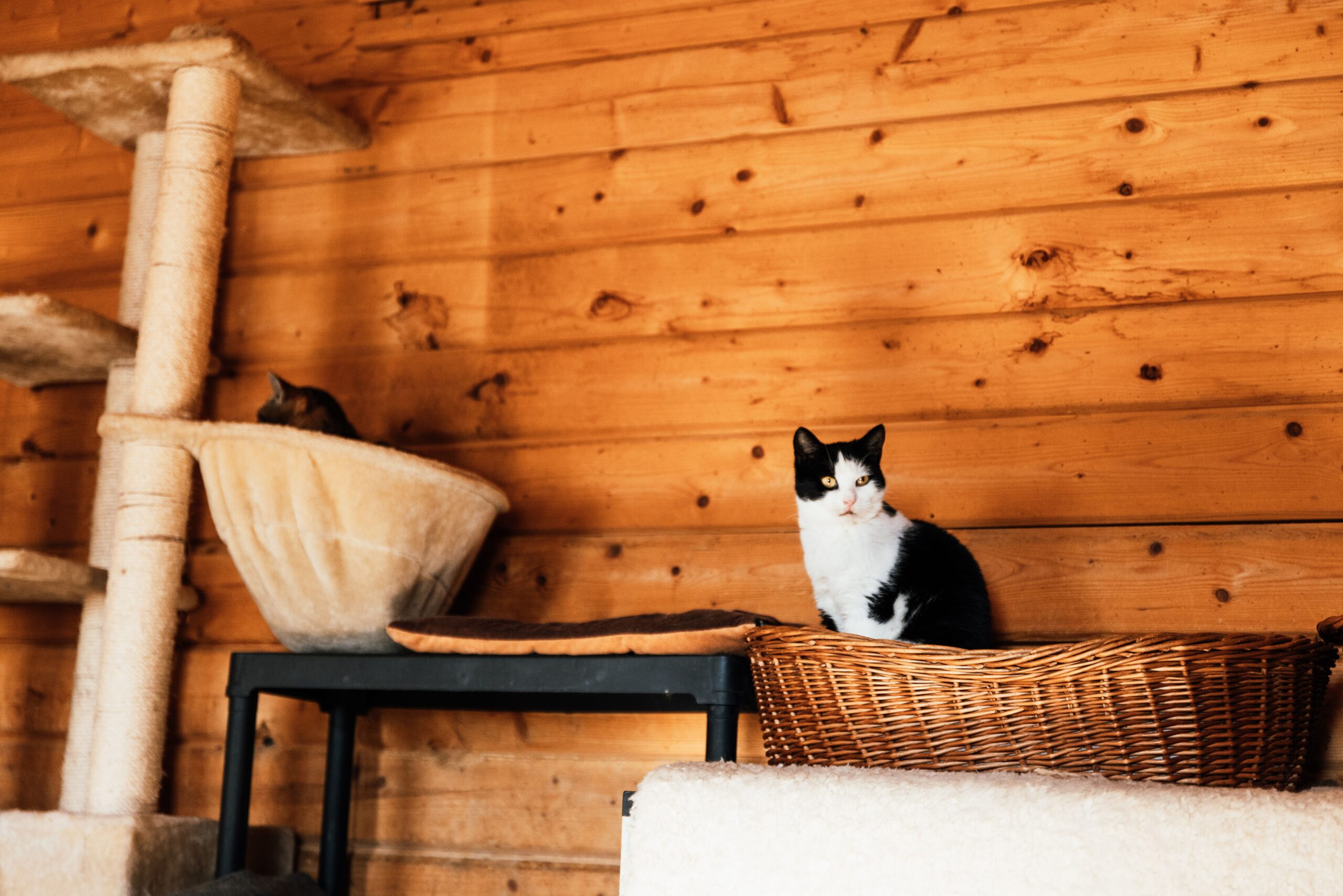
My favorite source for budget pet furniture is the secondhand market. Thrift stores, estate sales, and online marketplace listings are full of small side tables, step stools, and sturdy baskets that convert beautifully into pet gear. A solid wooden step stool ($5 to $10 used) becomes a perfect bedside ramp for an older dog, and a wide basket ($3 to $8) lined with a folded blanket is a cat bed your cat will actually choose.
When buying used, I check for stability, avoid anything with a strong chemical smell, and steer clear of pieces with loose staples or flaking paint. A quick wipe-down with pet-safe cleaner is usually all it takes. The ASPCA has good general guidance on safe materials if you are unsure whether a finish or fabric is pet-appropriate.
Repurpose what you already own
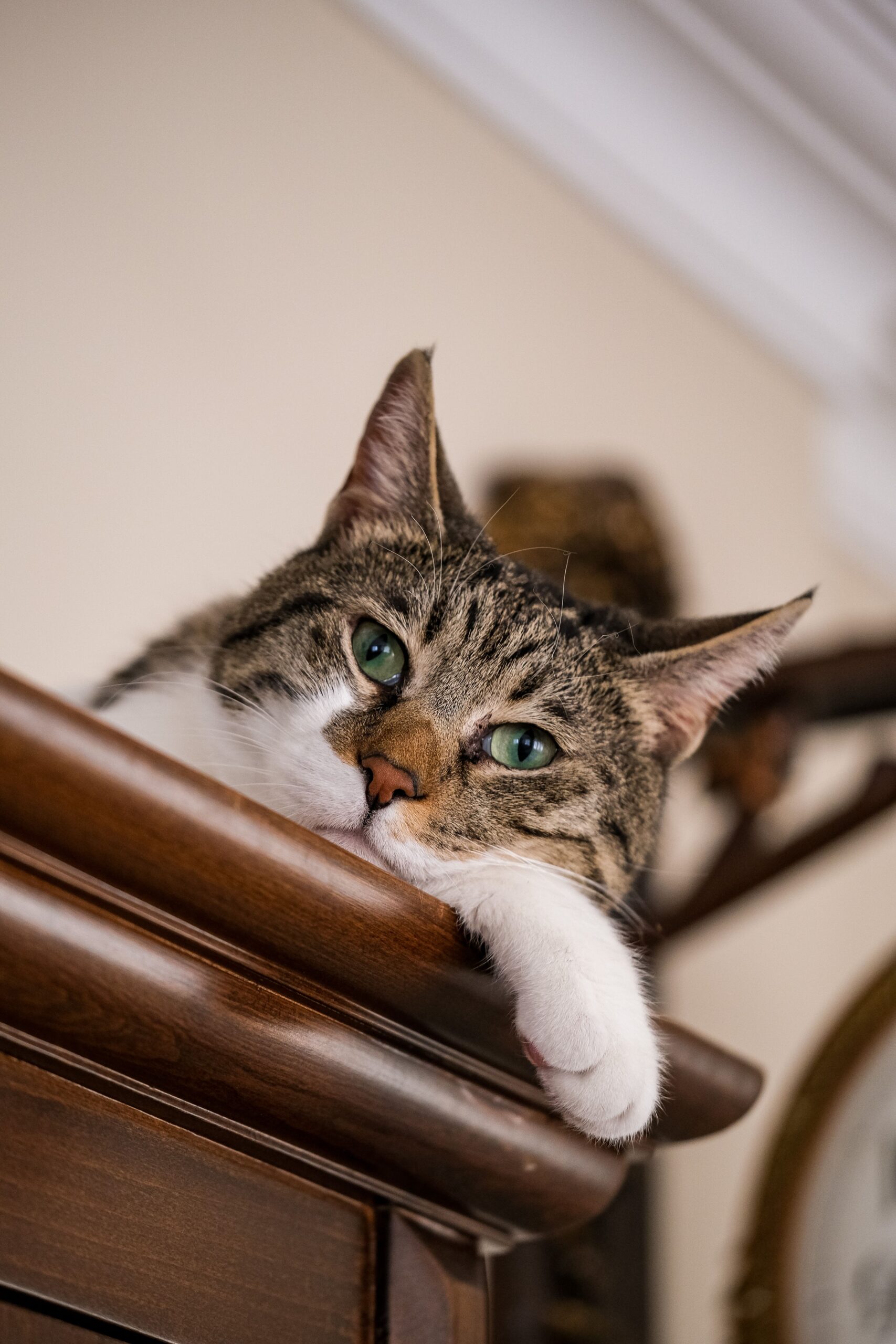
Before you buy anything, look around your own apartment. An unused ottoman becomes a dog step to the couch, a wine crate stands up as a feeding station, and an old ladder leaned and secured to the wall turns into a cat climbing frame. Repurposing is the cheapest budget pet furniture of all, and it clears clutter at the same time.
Smart swaps that save the most
Some swaps deliver a bigger payoff than others. These are the budget pet furniture trades that have saved me the most money over the years, without my pets noticing any downgrade:
- Cat tower to wall shelves: $200 down to $30 to $40 in bracket shelves.
- Designer dog bed to foam-and-cover: $120 down to about $25.
- Scratching post to a $6 sisal doormat wrapped around a table leg.
- Feeding station to a repurposed crate or tray: often free.
- Pet gate to a tension rod and fabric panel: $15 instead of $60.
- Litter box furniture to a thrifted cabinet with a cut entry hole.
Not every swap is worth it, though. I splurge on anything load-bearing that could hurt my pet if it fails, like a tall climbing structure, and on chew-proof bowls for a determined puppy. Budget pet furniture is about cutting waste, not cutting corners on safety.
Making cheap look intentional
The reason DIY sometimes gets a bad reputation is that it can look thrown together. A few small touches fix that instantly. Matching your pet gear to one or two colors already in the room, using a single fabric for covers and cushions, and keeping lines simple makes budget pet furniture read as a design choice rather than a compromise.
In a small apartment this matters more, because the pet’s stuff is always in view. I aim for pieces that pull double duty, like a storage bench that hides toys and also seats a guest, so the room stays uncluttered and the furniture earns its footprint twice over.
DIY projects worth the afternoon
If you enjoy making things, a few weekend projects give the best return on budget pet furniture. A simple raised feeder built from a $6 wooden crate keeps bowls off the floor and saves an older dog’s neck, while a window perch made from a bracket shelf and a cushion costs under $15 and becomes your cat’s favorite spot in the whole apartment.
None of these require power tools or real carpentry skills. I keep a small kit of a screwdriver, a level, and a pack of drywall anchors, and that covers ninety percent of what I build. Measure twice, mount into a stud or use rated anchors for anything a pet will put weight on, and you will end up with pieces sturdier than a lot of what the store sells.
The bonus with DIY budget pet furniture is that you can size it to your exact space, which matters enormously in a small apartment where a store-bought piece is usually too big or too deep. Building to fit an awkward corner turns dead space into something your pet loves.
Mistakes that cost you money later
Cheap is only a bargain if it lasts, and a few false economies will cost you more in the long run. The most common one is buying flimsy fabric that a cat shreds or a dog chews through in a week; you end up replacing it three times and spending more than the durable option would have. When it comes to anything your pet will scratch or gnaw, sturdier materials are the real budget pet furniture choice.
Another trap is ignoring washability. A bed cover that cannot go in the machine becomes a permanent source of odor and hair, and you will toss it long before its time. I only make or buy covers with removable, washable fabric now, because in a small apartment a lingering pet smell is impossible to escape.
Finally, resist buying for the pet you wish you had. A giant climbing tower for a senior cat who no longer jumps, or a huge crate for a dog who hates enclosed spaces, is money spent on your fantasy rather than their reality. Watch what your pet already gravitates toward, and let that guide every budget pet furniture decision you make.
Where to start this week
You do not have to overhaul everything at once. Pick the single most overpriced item on your wish list, find the budget pet furniture version of it, and build the one swap this weekend. Seeing your pet ignore the expensive idea in favor of your $10 solution is weirdly satisfying, and it builds the confidence to tackle the next one.
Start with a thrift-store visit and a look around your own closets. Between the two, you will almost always find the makings of a bed, a perch, or a scratcher for the price of a coffee, and your pet will be every bit as happy as they would be with the fancy version.
Related reading
- DIY Home Grooming: Dog Grooming Tools Under $30 That Actually Work
- Pet Insurance vs Emergency Fund: Which Makes Sense on a Budget
- How to Find Affordable Vet Care Without Risking Your Pet’s Health

Fernanda Amaral writes about making small homes work for pets and their humans — apartment-friendly setups, budget care and organization that actually fits. She shares practical tips tested in real small spaces.