
My bathroom is so small that if I sit on the edge of the tub, my knees touch the opposite wall. So when I adopted Nina, the obvious spot for her litter box was also the only spot: that same tiny bathroom I use every morning. For the first week it was a disaster of tracked litter and a smell that greeted me before my coffee did. Fitting a litter box in a small bathroom without turning the room into a hazard zone took some problem-solving, but it is absolutely doable, and I have not smelled a thing in months.
This guide covers where to put the box, how to control odor completely, how to stop litter tracking, and a few clever space-saving setups, all tuned for the tiniest of bathrooms and renter-friendly throughout.
Why the bathroom is actually a smart choice
Before the how-to, a reassurance: the bathroom is often the best room for a cat’s toilet. It usually has an easy-clean floor, a nearby water source, some ventilation, and a door you can prop for cat access while containing mess. Putting a litter box in a small bathroom keeps the least pleasant part of cat ownership out of your living and sleeping areas entirely.
Finding space where there seems to be none
The trick in a tiny bathroom is to use space that is currently wasted. Look at the gap beside the toilet, the area under a pedestal sink, or the corner behind the door. A corner-shaped or compact box tucks into these spots far better than a big rectangular tray.
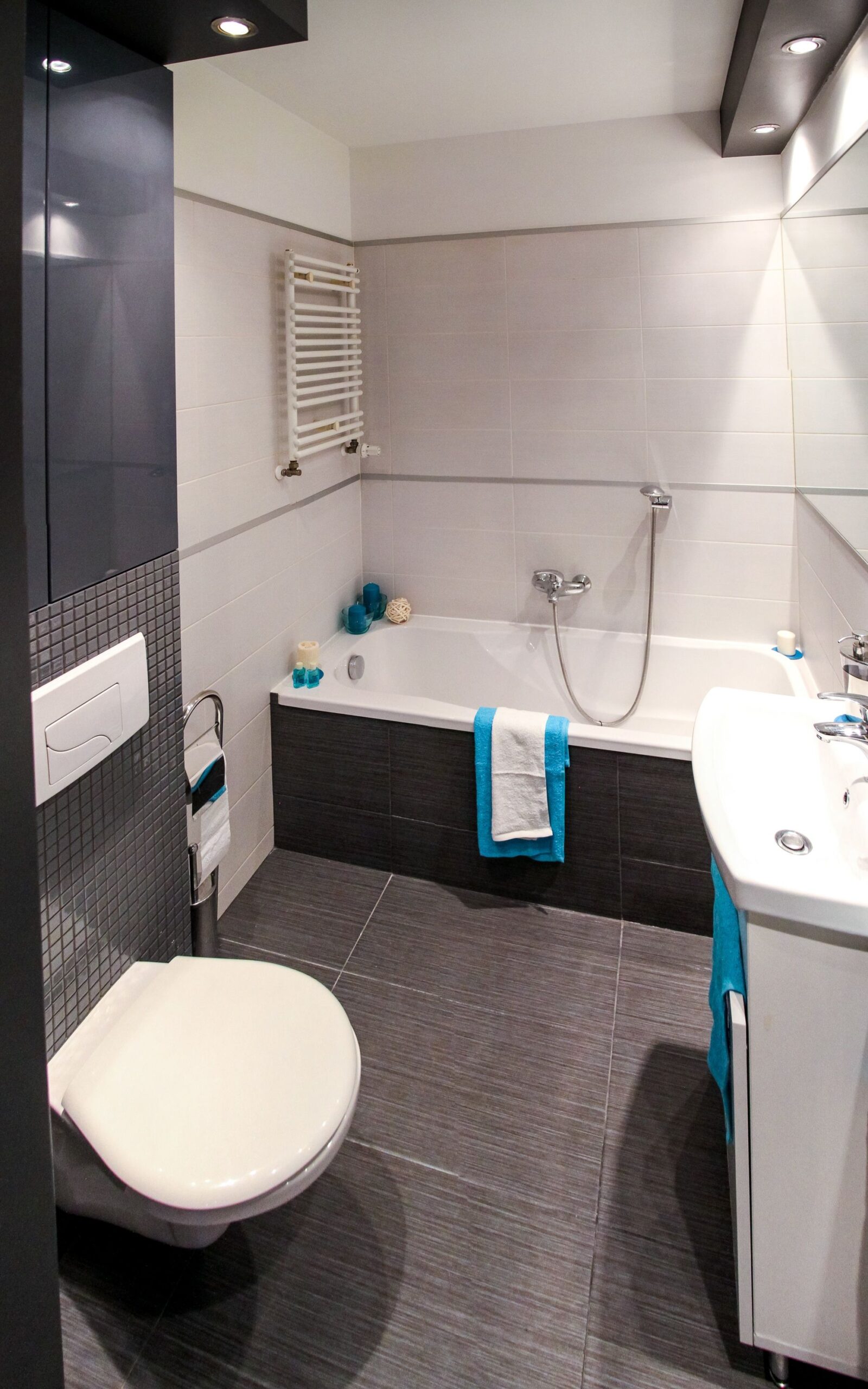
- Beside the toilet: often the perfect width for a narrow or corner box.
- Under a pedestal or wall-mounted sink: usually dead space at floor level.
- Behind the door: works if the door doesn’t swing into the box.
- Inside a vanity cabinet: remove a shelf and cut a cat door for a hidden setup.
- On top of the toilet tank area: only with a very secure, cat-safe shelf.
Measure your chosen spot before buying, since a box that doesn’t fit is worse than no plan at all.
Winning the war on odor
Smell is the number one worry with a litter box in a small bathroom, and it is entirely controllable. The single biggest factor is scooping frequency; in a small space, scoop at least twice a day and the odor essentially disappears. A neglected box in a big room smells worse than a scrupulously clean one in a closet.

The odor-control toolkit
Beyond scooping, a few tools keep the air fresh. Use a high-quality unscented clumping litter, since heavy perfumes often bother cats and just mask smell rather than removing it. Run the bathroom exhaust fan or crack a window for airflow, and keep a covered bin with a lid right there for scooped waste so you are not carrying it through the apartment.
A box of baking soda sprinkled into the litter absorbs odor cheaply, and a small charcoal air purifier tucked in the corner handles the rest. Avoid plug-in air fresheners near the box, as many cats dislike the scent and may avoid the box altogether.
Stopping litter tracking in a tiny space
In a small bathroom, tracked litter ends up underfoot instantly. A large litter mat in front of the box catches most of it as your cat exits, and a high-sided or top-entry box dramatically cuts scatter. These two changes alone transform how clean the floor stays.
Sweep or vacuum the small floor area daily; because the space is tiny, this takes under a minute. Keeping a handheld broom or mini-vac right in the bathroom makes the habit effortless.
Space-saving box setups
A few clever products are built exactly for this problem. A top-entry box has a smaller floor footprint and contains both smell and litter. A hidden litter cabinet or a converted vanity keeps the box completely out of sight while looking like normal furniture, ideal when guests use the same bathroom.

If floor space is truly gone, a corner box reclaims the triangle of wasted space most boxes ignore. Whatever you choose, keep access easy for your cat, since a setup that is awkward to enter will simply go unused. The ASPCA’s litter box guidance is a great reference on keeping cats comfortable with their setup.
Keeping your cat happy with the setup
A cat that dislikes its bathroom will find somewhere worse to go, so comfort matters. Make sure the box is big enough for your cat to turn around, keep the door propped so they always have access, and never startle them there. If your cat suddenly avoids the box, a vet check rules out medical causes before you blame the location.
For more on feline litter habits and behavior, the Humane Society’s cat behavior tips are a reliable free resource worth bookmarking.
A weekly deep-clean routine
Daily scooping keeps a litter box in a small bathroom fresh day to day, but a weekly reset stops odor from ever building up in the box itself. Once a week, empty the box completely, wash it with warm water and unscented soap, dry it fully, and refill with fresh litter. Plastic absorbs smell over time, so this deep clean is what keeps the whole room from developing a lingering background odor.
While the box is out, give the floor and baseboards a quick wipe, since stray litter and dust collect in a tight space fast. Replacing the box entirely every year or so is cheap insurance against permanently smell-soaked plastic. This ten-minute weekly habit is the difference between a bathroom that smells clean and one that never quite does.
Multi-cat considerations in one bathroom
The standard rule is one litter box per cat plus one extra, which sounds impossible for a litter box in a small bathroom shared by two cats. In practice, you can often fit two low-profile or corner boxes side by side, or stack the solution across two nearby rooms if the bathroom truly cannot hold more than one. What you cannot do is under-provide, since crowding one box leads to accidents elsewhere.
If space allows only a single box for two cats, scoop even more often, three or four times a day, and watch closely for any signs one cat is guarding the box. A hooded box can actually make guarding worse in tight quarters, so an open or top-entry design is often the better pick for multi-cat small bathrooms.
Renter-friendly protection for floors and walls
Because a litter box in a small bathroom sits so close to everything, protecting your rental surfaces is worth a few minutes of setup. A waterproof tray or a cut-to-size vinyl mat under and behind the box shields the floor and baseboard from stray litter, splashes, and the occasional miss, and it lifts out for easy cleaning. None of this requires drilling or permanent changes.
A strip of clear adhesive wall protector behind the box guards the paint from litter dust and enthusiastic digging. When you move out, everything peels away and your deposit stays intact, which is exactly what you want from any renter-friendly pet setup.
What to do if the smell still lingers
If you have dialed in placement, scooping, and airflow but a litter box in a small bathroom still smells, work through the usual culprits one at a time. Switch to a firmer-clumping unscented litter, check that the exhaust fan actually vents outside rather than just recirculating, and confirm you are deep-cleaning the box weekly rather than just topping it up.
Persistent odor despite a clean box can also signal a health issue, since changes in a cat’s urine or stool smell are worth mentioning to your vet. More often, though, the fix for a smelly litter box in a small bathroom is simply a little more frequency and fresh air, both of which cost almost nothing.
Final thoughts
Fitting a litter box in a small bathroom without the smell comes down to smart placement, twice-daily scooping, good airflow, and a mat to catch tracking. Get those right and even the tiniest bathroom stays fresh and functional for both of you. Start tonight by scooping, adding a litter mat, and running the fan, and you will notice the difference by morning.
Related reading
- How to Set Up a Pet Feeding Station in a Tiny Kitchen
- How to Make a Small Living Room Work for You and Your Dog
- How to Create a Cozy Pet Sleeping Area in Any Room

Fernanda Amaral writes about making small homes work for pets and their humans — apartment-friendly setups, budget care and organization that actually fits. She shares practical tips tested in real small spaces.