
For the first year with my dog, my bedroom was a battlefield. He shed on the duvet, knocked a lamp off the nightstand chasing a moth, and claimed the exact center of the mattress every night while I clung to the edge. In a small apartment the bedroom is not just where you sleep, it is often the only truly quiet room you have, and I was slowly losing mine. It took some trial and error, but I eventually turned it into a genuinely pet-friendly bedroom that works for both of us.
The goal of a pet-friendly bedroom is not to hand the room over to your animal; it is to design a space where you both rest well without constant friction. That means thinking about where they sleep, what your surfaces can survive, and how to keep hair and hazards under control in a room that is probably tighter than you would like. Here is how I got there, one decision at a time.
Decide the bed question first
Everything about a pet-friendly bedroom flows from one choice: is your pet allowed on your bed or not? There is no wrong answer, but you have to pick one and be consistent, because a dog who is sometimes allowed up will simply keep trying every night. Decide based on your sleep, your allergies, and your pet’s size, then commit to it.
If they do sleep with you, a washable duvet cover and a throw blanket over your side of the bed save your bedding and your sanity. If they do not, the trick is making their own spot so appealing that the floor beside you beats the mattress. Either way, the decision shapes the whole room.
Carve out their own sleeping corner
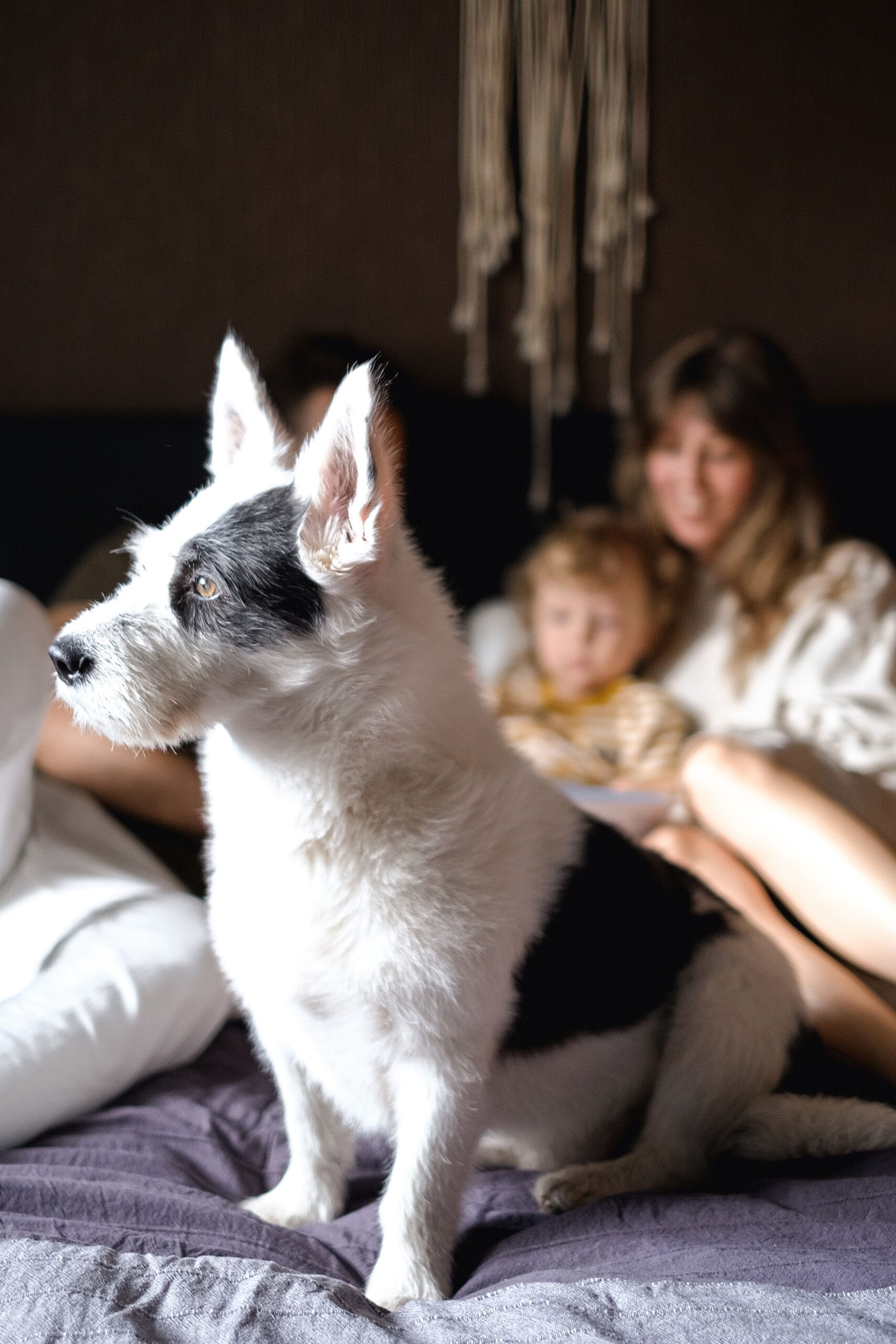
Even in a tiny room, giving your pet a defined corner of their own is the single best thing you can do. A pet-friendly bedroom needs a spot that belongs to them: a bed tucked beside the nightstand, under a window, or in the gap at the foot of your bed. Animals feel safer with a den of their own, and a clear spot keeps their gear from sprawling across the floor.
Place the bed away from the door and any drafts, and near enough to you that they still feel part of the pack. I put my dog’s bed at the foot of mine, on a small washable rug that catches hair and defines the zone. He settled into it within a week once he understood it was his.
Use vertical space for cats
Cats want height, not floor space, so a pet-friendly bedroom for a cat means a perch. A single wall shelf or a cleared dresser top by the window gives them a lookout that keeps them off your pillow. Add a soft pad up there and most cats will happily choose the perch over your face at 5 a.m.
Choose surfaces that survive pets
The fastest way to ruin a pet-friendly bedroom is filling it with things pets destroy. Skip delicate linen bedskirts and go for tightly woven, washable fabrics that resist snags and hair. A low-pile washable rug beats a shaggy one that traps fur, and a headboard in wood or metal survives paws far better than upholstered fabric that snags and stains.
Color choices matter more than people expect. Matching your bedding roughly to your pet’s coat hides the inevitable hair between washes, which in a small room you see constantly. I switched to a mid-gray duvet that matches my dog and cut my visible-hair stress in half overnight.

Keep hair, hazards, and clutter down
A pet-friendly bedroom stays livable only if you stay ahead of the mess. A few habits do most of the work, and none of them take long:
- Keep a rubber pet-hair brush on the nightstand for a 30-second daily pass.
- Store cords and chargers in a drawer so they are not chew targets.
- Move houseplants out if any are toxic to your species of pet.
- Use a lidded hamper so socks and laundry stay off the floor.
- Wash pet bedding weekly to keep dander and odor from building up.
- Add an air purifier if allergies flare in a closed sleeping space.
Allergies deserve a special mention because a bedroom is where they hit hardest. If anyone in the home reacts to dander, the ASPCA on pet allergies recommends keeping pets off the bed and running a HEPA filter, which can make sharing the room possible even for sensitive sleepers.
Make the small room feel bigger
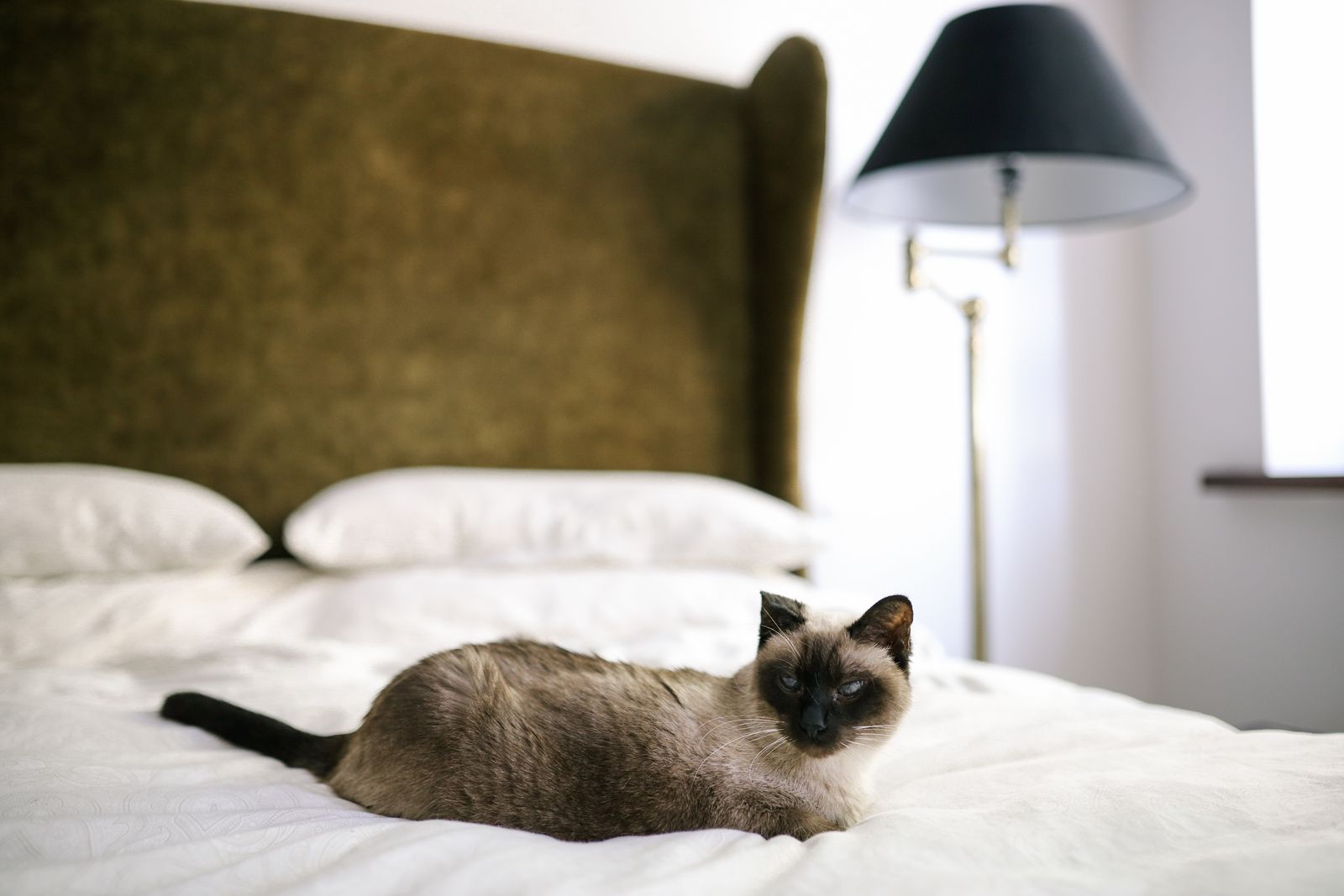
A pet-friendly bedroom in a small apartment has to fight for every inch, so the pet’s needs and your breathing room have to share space cleverly. Furniture that does double duty is your best friend here. A storage bench at the foot of the bed hides pet blankets and toys while giving you a place to sit and pull on shoes, and an under-bed drawer swallows the grooming kit and spare bedding you would otherwise trip over.
Keep the floor as clear as you can, because visual clutter makes a small room feel chaotic and a chaotic room feels worse when there is fur in the mix. I keep only the pet bed and one rug on the floor and everything else lifted or tucked away. The room instantly feels calmer, which matters when it is the one place you go to unwind.
Light and mirrors help too. A mirror opposite the window bounces daylight around and makes a cramped pet-friendly bedroom feel open rather than crowded, even with a dog bed and a cat perch competing for space. These are cheap tricks, but in a tight room they are the difference between cozy and claustrophobic.
Build a bedtime routine
Design gets you most of the way, but a routine seals the deal. A pet-friendly bedroom works best when your pet knows what bedtime looks like: a last bathroom trip, a settle command, and a quiet room signals sleep. Predictability calms animals, and a calm animal means a calm room.
I keep one worn toy in my dog’s corner that only comes out at night, which cues him that the day is over. Small rituals like that do more for peaceful nights than any gadget, and they cost nothing at all.
Protecting your sleep and theirs
A pet-friendly bedroom is only a success if everyone actually sleeps. Dogs and cats are often more active at dawn and dusk than we are, so a little planning stops them from waking you at first light. A late-evening play session burns off the last of their energy, and a small measured snack before bed keeps a food-driven pet from nudging you awake with hunger at sunrise.
Blackout curtains help more than you would think, since they keep early light from switching your pet into wake-up mode. In a studio or one-bedroom where the bed sits close to the window, that single change can buy you an extra hour of quiet. Your pet learns that dark means sleep, the same as you do.
Finally, give an anxious pet something soothing for the night, like a soft heartbeat toy for a puppy or a worn t-shirt that smells like you. A secure animal rests deeply instead of pacing, and a pet-friendly bedroom that helps them feel safe pays you back with unbroken nights of your own.
Start with one change tonight
You do not need to redesign the whole room this weekend. Pick the one thing causing the most friction, whether that is hair on the bedding or a pet with nowhere of their own to sleep, and fix that first. A pet-friendly bedroom comes together one small, deliberate change at a time.
Set up their corner tonight, throw a washable cover on the bed, and see how the next few nights feel. Once the room stops being a nightly negotiation, you will wonder why you waited so long to design it on purpose.
Related reading
- Working From Home With Pets: How to Set Up a Shared Office
- How to Set Up a Pet Feeding Station in a Tiny Kitchen
- How to Fit a Litter Box in a Small Bathroom Without the Smell
Fernanda Amaral writes about making small homes work for pets and their humans — apartment-friendly setups, budget care and organization that actually fits. She shares practical tips tested in real small spaces.