
My cat discovered the balcony the same week I moved in, and my stomach dropped watching her balance on the railing eight floors up, tail twitching at a pigeon below. That balcony was the whole reason I had chosen the apartment, a rare slice of outdoor space in the city, and now it felt like a hazard I would have to keep permanently locked. It turned out I was wrong. With a weekend of work I built a cat-safe balcony that let her lounge in the sun and watch the birds without giving me a heart attack, and I did not have to block the view to do it.
Cats and balconies are a genuinely dangerous mix. Vets even have a name for the injuries from falls, high-rise syndrome, and it is heartbreakingly common in warm months when windows and doors open up. The goal of a cat-safe balcony is to give your cat that enriching outdoor access while making a fall or an escape impossible. Here is how to do it affordably, in a rental, without ruining the view you love.
Why balconies are so risky for cats
People assume cats are too sure-footed to fall, but that confidence is exactly the problem. A cat locked onto a bird or a fluttering leaf will lunge without measuring the drop, and a narrow railing offers no margin for a misjudged pounce. Building a cat-safe balcony starts with accepting that even the most careful cat can slip.
Gaps are the other hidden danger. Many balcony railings have vertical bars or a bottom gap wide enough for a determined cat to squeeze through, and kittens can fit through spaces that look impossibly small. Any real solution has to close those gaps as well as raise the barrier height.

Netting: the renter-friendly hero
For most apartments, transparent cat netting is the single best way to create a cat-safe balcony. It is a strong, near-invisible mesh you stretch across the open sides and secure to the railing and the wall or ceiling above. From a few feet away you barely see it, so your view stays almost entirely intact while your cat stays completely contained.
A roll of proper cat netting runs about $15 to $30, and you can hang it without drilling by using tension rods, adhesive hooks, or a spring-loaded frame. That renter-friendly approach is why netting is my top recommendation: it makes a cat-safe balcony achievable even when your lease forbids permanent changes, and it comes down cleanly when you move.
Installing it without drilling
Run a tension rod across the top of the balcony opening and clip the netting to it, then anchor the bottom and sides to the railing with UV-resistant zip ties. Pull it taut so there is no sag a cat could push through, and double-check every edge for gaps. A properly tensioned cat-safe balcony net should have no opening bigger than your cat’s head anywhere along its perimeter.
Other barrier options
Netting is not the only path to a cat-safe balcony. If you want something sturdier or your balcony has an unusual shape, a few alternatives work well:
- Garden trellis panels zip-tied along the railing to raise its height.
- A freestanding “catio” mesh enclosure that needs no wall fixings.
- Clear polycarbonate panels for a wind-blocking, see-through wall.
- Chicken wire behind planters to quietly close a wide bottom gap.
- A tall pet playpen set on the balcony for supervised time only.
Whatever you choose, prioritize materials rated for outdoor UV exposure, since sun-brittle plastic fails fast and a failed barrier is worse than none. Combining a couple of these, like trellis plus netting, gives an extra-secure cat-safe balcony for a nervous owner.
Make it a place they love
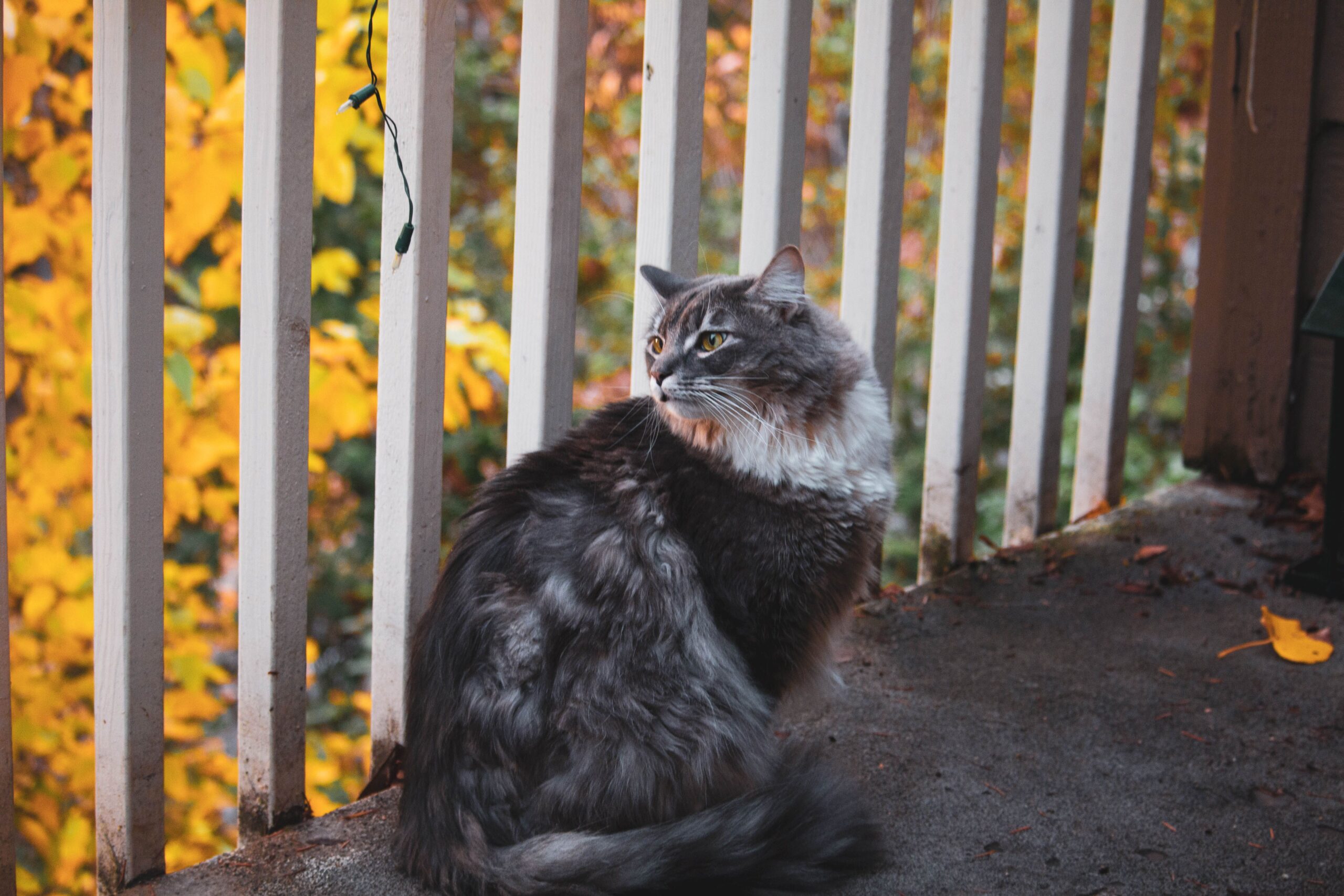
Once it is secure, a cat-safe balcony becomes prime real estate for an indoor cat. Add a weatherproof bed or a covered perch where they can nap in the fresh air, and set up a shaded spot so they are never stuck in full sun. A little cat grass or catnip in a pot turns the space into a genuine enrichment zone.
Be careful with plants, though. Many popular balcony plants are toxic to cats, so check every one before you bring it out. The ASPCA maintains a searchable list of toxic and non-toxic plants that I check before buying anything green for the balcony.

Supervision and good habits
Even the best cat-safe balcony benefits from a few sensible habits. Inspect the netting and fixings every few weeks for wear, especially after storms, and never prop the door and walk away until you fully trust the setup. For the first while, treat balcony time as supervised time so you can spot any weak point before your cat does.
Keep chairs and planters away from the barrier too, since a cat will happily use them as a launch pad to clear a railing they could not otherwise reach. Thinking about those little climbing routes is what separates a truly cat-safe balcony from one that only looks secure.
Keeping the view you paid for
The worry I hear most often is that safety means staring at a wall of ugly mesh, but a well-planned cat-safe balcony barely changes what you see. Clear netting and transparent panels almost vanish against the sky, and choosing a mesh color that matches your railing helps it disappear entirely. Stand where you usually sit and check the sightlines before you fix anything permanently, so the barrier sits where it protects without cutting across your favorite part of the view.
Lighting helps too. A barrier tends to disappear in daylight and only shows when backlit at night, so a few soft solar lights along the railing draw the eye to the space itself rather than the mesh. Little design decisions like these are the difference between a cat-safe balcony that feels like a compromise and one that feels like an upgrade.
If you truly cannot bear any netting on one side, consider a partial enclosure that secures only the railing and the gaps while leaving the upper view open, paired with strict supervision. It is not as bulletproof as full containment, but a thoughtfully built cat-safe balcony that fits how you actually live is one you will keep using, and consistency is what keeps your cat safe over the long run.
Budgeting and doing it in stages
You do not have to finish everything in one expensive weekend. A basic but effective cat-safe balcony can come together for well under forty dollars: a roll of netting, a pack of UV zip ties, and a tension rod cover the essentials. Add the comfort touches like a weatherproof bed, a shade cloth, and safe plants later, spreading the cost over a few paychecks.
I built mine in stages and it worked out better for it, because I got to see how my cat actually used the space before spending on extras. She ignored the fancy perch I almost bought first and instead claimed a simple sunny corner, so that is where the bed ended up. Watching your cat guides every upgrade, and it stops you wasting money on a cat-safe balcony feature they never wanted.
Give your cat the view safely
You really can have it both ways: the balcony you fell in love with and a cat who gets to enjoy it. Start with a roll of netting and an afternoon, and you will turn an off-limits danger zone into your cat’s favorite spot in the whole apartment.
Measure your balcony opening this week, order some cat netting, and set aside a Saturday for the install. The first time you watch your cat doze safely in the sunshine with the city spread out below, you will know it was one of the best small projects you ever did.
Related reading
- Working From Home With Pets: How to Set Up a Shared Office
- How to Set Up a Pet Feeding Station in a Tiny Kitchen
- How to Fit a Litter Box in a Small Bathroom Without the Smell

Fernanda Amaral writes about making small homes work for pets and their humans — apartment-friendly setups, budget care and organization that actually fits. She shares practical tips tested in real small spaces.