
If your front door is a tangle of leashes, poop-bag rolls, a muddy harness and one lonely glove, you already know the problem: in a small apartment, the entryway is the first thing you see and the first thing that falls apart. Good leash and gear organization is the fastest way to make a narrow hallway feel calmer, get out the door faster on a rainy morning, and stop losing your dog’s harness five minutes before a walk. This guide focuses on renters and small-space owners, with real prices in USD and measurements that fit a hallway barely wide enough for two people to pass.
None of the ideas below require drilling into a wall you’re not allowed to touch, and most cost between $8 and $40. The goal is a system you’ll actually keep using after the novelty wears off, because the best leash and gear organization is the kind that takes zero thought at 6 a.m.
Why the Entryway Is the Hardest Spot to Keep Tidy
A narrow entryway does three jobs at once: it’s a landing zone for keys and shoes, a launch pad for walks, and a decompression spot when you come home. In a 600-square-foot apartment there’s no mudroom to absorb the chaos, so every leash, treat pouch and pair of booties competes for the same 18 inches of wall. The clutter isn’t a discipline problem; it’s a storage problem. When there’s no assigned home for the harness, it lands on the floor, and floor clutter in a narrow space is both a tripping hazard and a stress trigger every time you walk in.
The fix is to think vertically and to keep the number of “homes” small. You want one hook zone, one basket or drawer, and one small surface. That’s it. More containers than that and you’ll spend more time sorting than walking your dog.
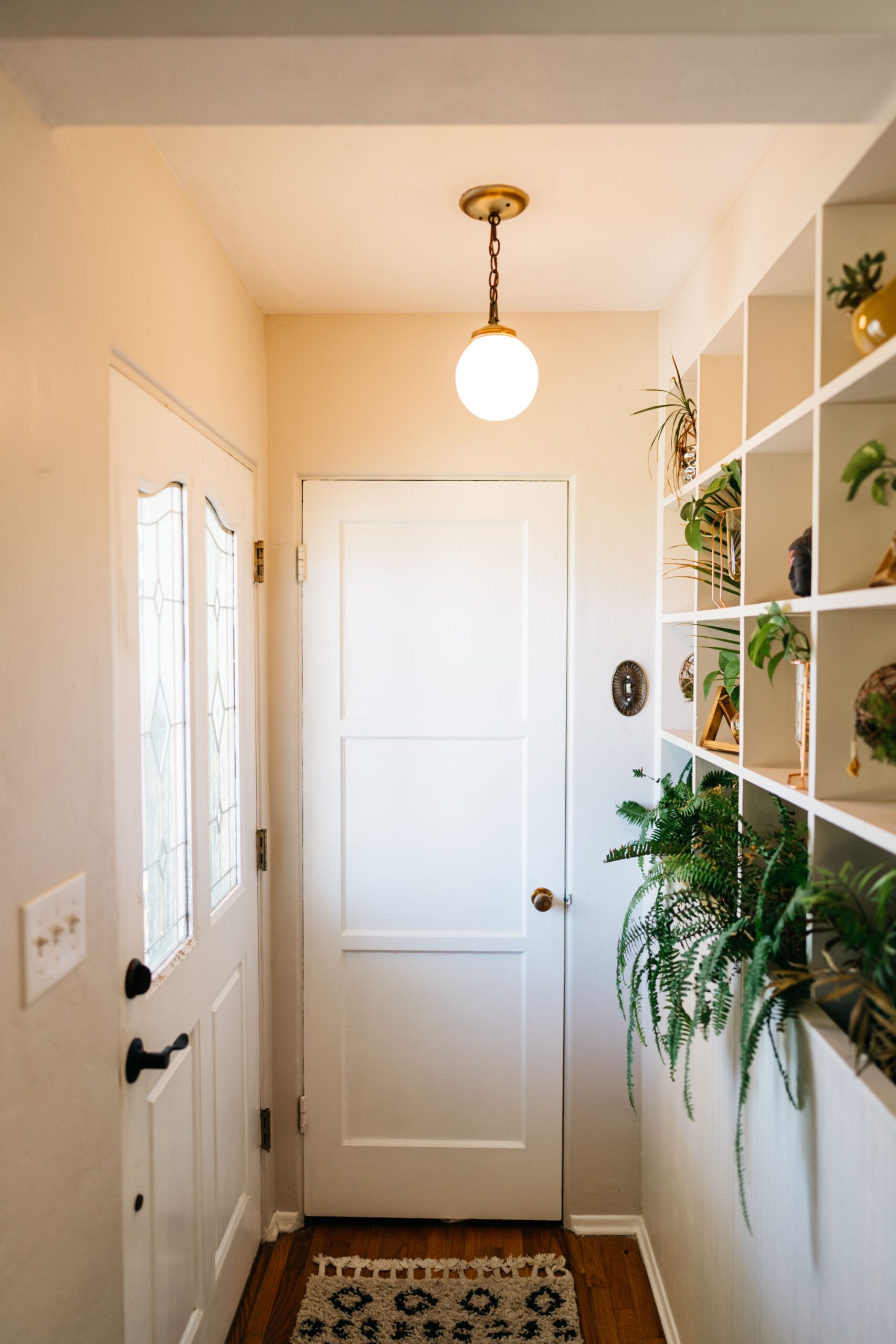
Start With a Vertical Hook Zone
The single highest-impact move is a row of hooks at chest height, roughly 48 to 54 inches off the floor so leashes hang without pooling on the ground. Renters have two good no-damage options. Adhesive hooks rated for 3 to 5 pounds (a four-pack runs about $8 to $12) hold a leash, a harness and a treat pouch easily. For anything heavier, an over-the-door hook rack ($15 to $25) hangs on a standard 1.375-inch interior door and holds four to six items without a single screw.
Assign each hook a job: one for the everyday leash, one for the backup or long line, one for the harness, one for a jacket or booties in winter. Labeling isn’t childish here; it’s what keeps a shared household from turning the hooks back into a pile within a week. A strip of painter’s tape and a marker costs nothing and makes the system self-explanatory to roommates and guests.
Contain the Small Stuff in One Basket
Poop bags, spare treats, a folding travel bowl, wipes for muddy paws and a spare collar all need a single catch-all. A shallow woven basket or a fabric bin (roughly $10 to $18) on a shelf or the floor beside the door keeps these from scattering. Choose something no deeper than 6 inches so you’re not digging; in a narrow entryway, a basket that’s wide and shallow beats one that’s tall and deep every time.
If you have the wall space, a small over-the-door pocket organizer (the kind sold for shoes or cleaning supplies, around $12 to $20) turns a door into a grid of clear pockets. Each pocket holds one category, and because you can see everything at a glance, you stop buying duplicate poop-bag rolls you already own.
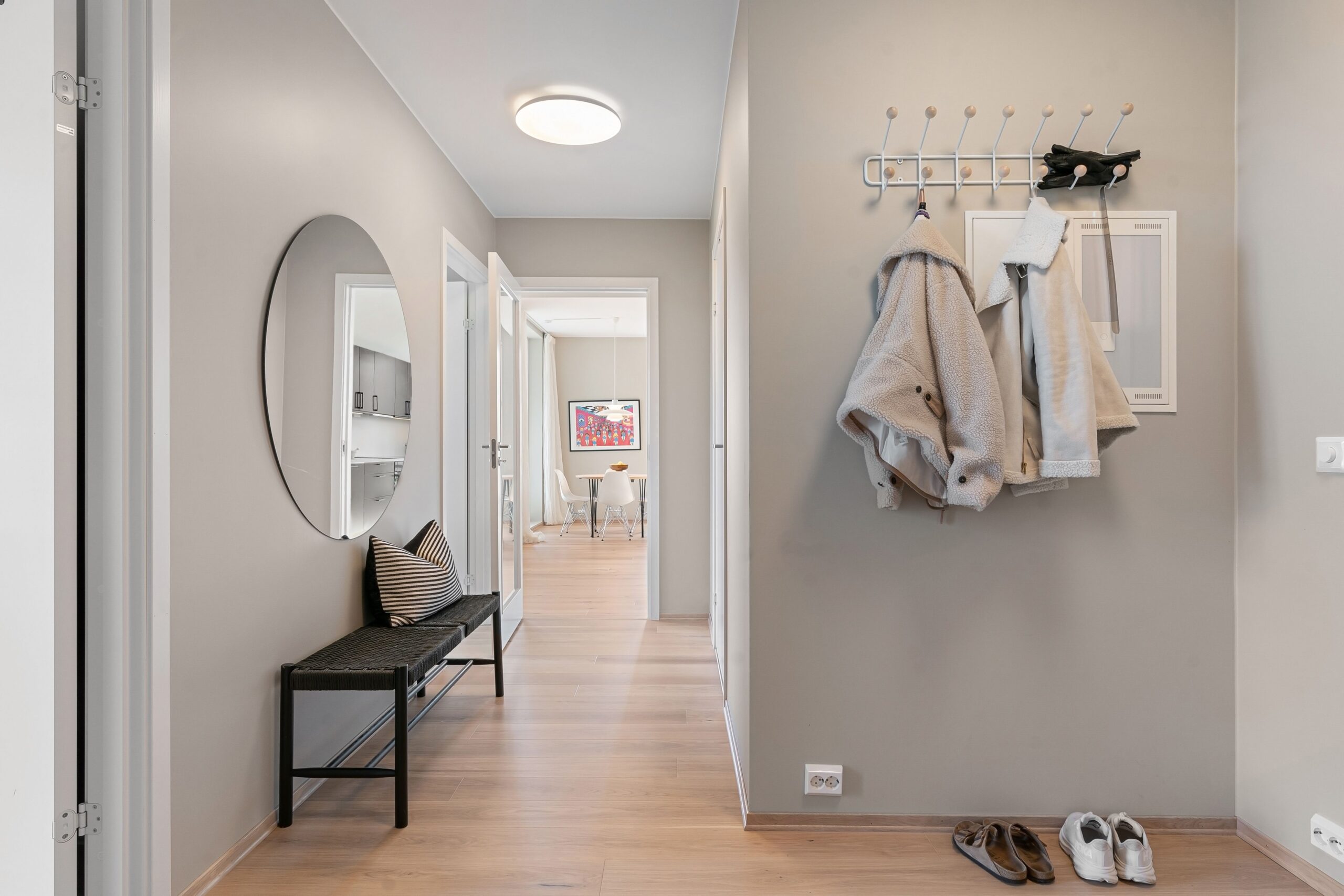
Use a Bench or Console With Hidden Storage
If your entryway can spare 12 to 15 inches of depth, a storage bench earns its footprint twice: it gives you somewhere to sit while you wrestle booties onto a wiggling dog, and it hides bulk under the lid. A narrow shoe bench (about $35 to $60) fits a 30-inch-wide hallway and swallows seasonal gear, a spare towel for wet paws, and the bag of kibble you buy for travel. For an even smaller footprint, a wall-mounted floating shelf with a lip keeps the surface at 8 inches deep, enough for keys and a leash but not enough to become a dumping ground.
Keep the top surface almost empty on purpose. A tray for keys and one small plant is plenty. The moment a flat surface fills up in a narrow space, it reads as clutter no matter how organized the rest of the system is.
Create a Muddy-Paw Landing Strip
Half the entryway battle is dirt, not gear. A washable mat just inside the door (a 24-by-36-inch ribbed mat runs $15 to $25) catches most of what comes in on four paws. Keep a stack of cheap microfiber cloths in your door basket for a ten-second paw wipe before your dog moves into the apartment. This one habit does more for your floors than any amount of vacuuming, and it pairs naturally with a good pet toy rotation routine that already trains you to reset the space daily.
For dogs who tolerate it, a small squeeze bottle of water and a towel by the door handles muddy days without a trip to the bathroom. Store the towel on its own hook so it dries between uses instead of festering in the basket.
Keep Walking Gear in a Grab-and-Go Set
The fastest morning is a pre-assembled kit. Clip the harness to the leash the night before, tuck a full roll of poop bags into the leash handle’s pocket or a small carabiner pouch, and hang the whole thing as one unit. When everything you need for a walk lives on a single hook, you cut the “where is the…” scramble to zero. This is the same logic behind a well-built pet first-aid kit: pack it once, keep it in a known spot, and you never assemble under pressure.
A small clip-on treat pouch that stays on the harness means you never leave without training treats. Refill it on Sunday and forget about it for the week. The whole point of good leash and gear organization is to move decisions out of the busy moment and into a calm one.
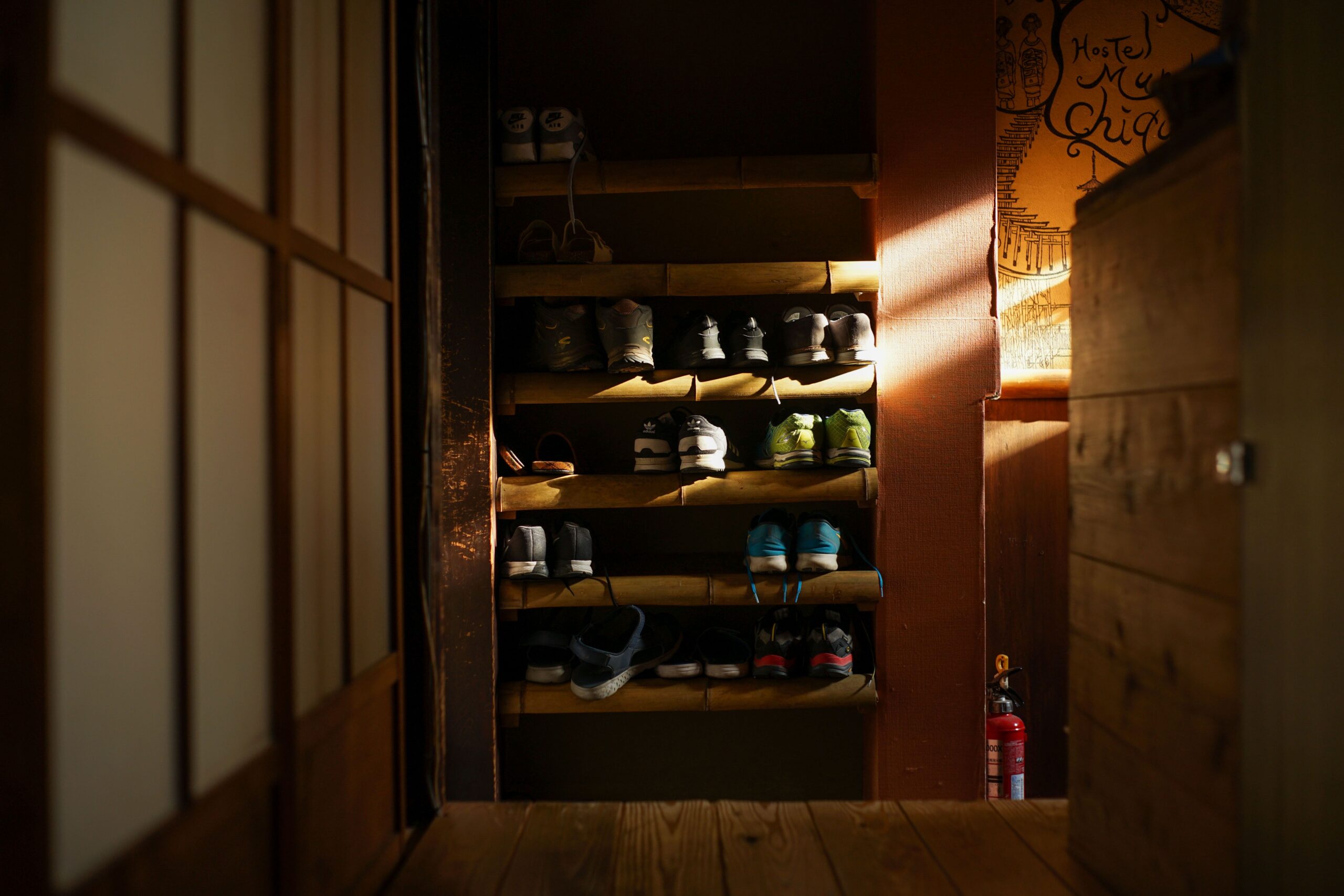
Label, Rotate, and Reset Weekly
Any system drifts. A five-minute Sunday reset keeps the entryway from sliding back into a pile: rehang stray leashes, refill poop bags and treats, shake out the mat, and toss the paw towel in the wash. Rotating seasonal gear matters too. In summer, store booties and the heavy coat in the bench and keep the cooling vest up front; reverse it in winter. Keeping only the current season’s gear at hand halves the visual clutter in a narrow space. If you’re organizing storage elsewhere in the home at the same time, the same shallow-bin logic works well for how you organize pet supplies in a tiny closet.
Safety is part of the reset, too. Check that your dog’s collar ID and harness fit are still current, and confirm gear isn’t frayed. The ASPCA’s dog care guidance is a good reminder of the basics, and the AVMA’s pet owner resources cover fit and identification in more detail.
A Sample Setup for a Narrow Entryway
Here’s a complete system for a hallway about 30 inches wide and 5 feet long, for well under $80: a four-pack of adhesive hooks at 50 inches high ($10), an over-the-door six-hook rack for backup gear ($20), one shallow woven basket for bags and treats ($14), a 24-by-36-inch washable mat ($18), and a stack of microfiber cloths you already own. Add a $40 narrow storage bench only if the floor space allows. That’s a full leash and gear organization setup that installs in an afternoon, leaves no holes in the wall, and gets you out the door in seconds.
The measure of success isn’t how it looks on day one. It’s whether, three weeks from now, the harness is still on its hook and the floor is still clear. Build for the tired, rushed version of yourself, and your narrow entryway will finally stay calm.

Fernanda Amaral writes about making small homes work for pets and their humans — apartment-friendly setups, budget care and organization that actually fits. She shares practical tips tested in real small spaces.