
A small living room shared with a pet has to survive claws, shedding, muddy paws, and the occasional accident, all while still looking like a place you want to relax. Choosing the right pet-friendly furniture is what makes that possible without constant stress about your sofa. For renters and small-space owners, the stakes are higher: you can’t hide a scratched couch in another room, and every piece has to earn its footprint. This guide covers the materials, shapes, and smart choices that hold up to real animals in a tight space, with practical price ranges in USD.
The secret is that pet-friendly furniture isn’t a special expensive category; it’s ordinary furniture chosen with the right fabrics, colors, and features. Get those decisions right and your living room stays comfortable for both you and your pet for years.
Fabric Is the Most Important Decision
Nothing matters more than what your furniture is covered in. Tightly woven synthetics like microfiber and performance polyester resist claws and clean easily, making them the best all-round choice for pet homes. Leather and quality faux leather wipe clean and don’t trap hair, though they can scratch, so they suit calmer pets. Avoid loose weaves, chenille, velvet, and boucle, which snag on claws and grab fur like magnets. A high rub-count fabric labeled for heavy-duty or commercial use will outlast a delicate one many times over.
Look for removable, machine-washable cushion covers whenever possible. In a small apartment where the sofa is also the guest bed and the movie-night spot, being able to strip and wash the covers is the single feature that keeps pet-friendly furniture livable.
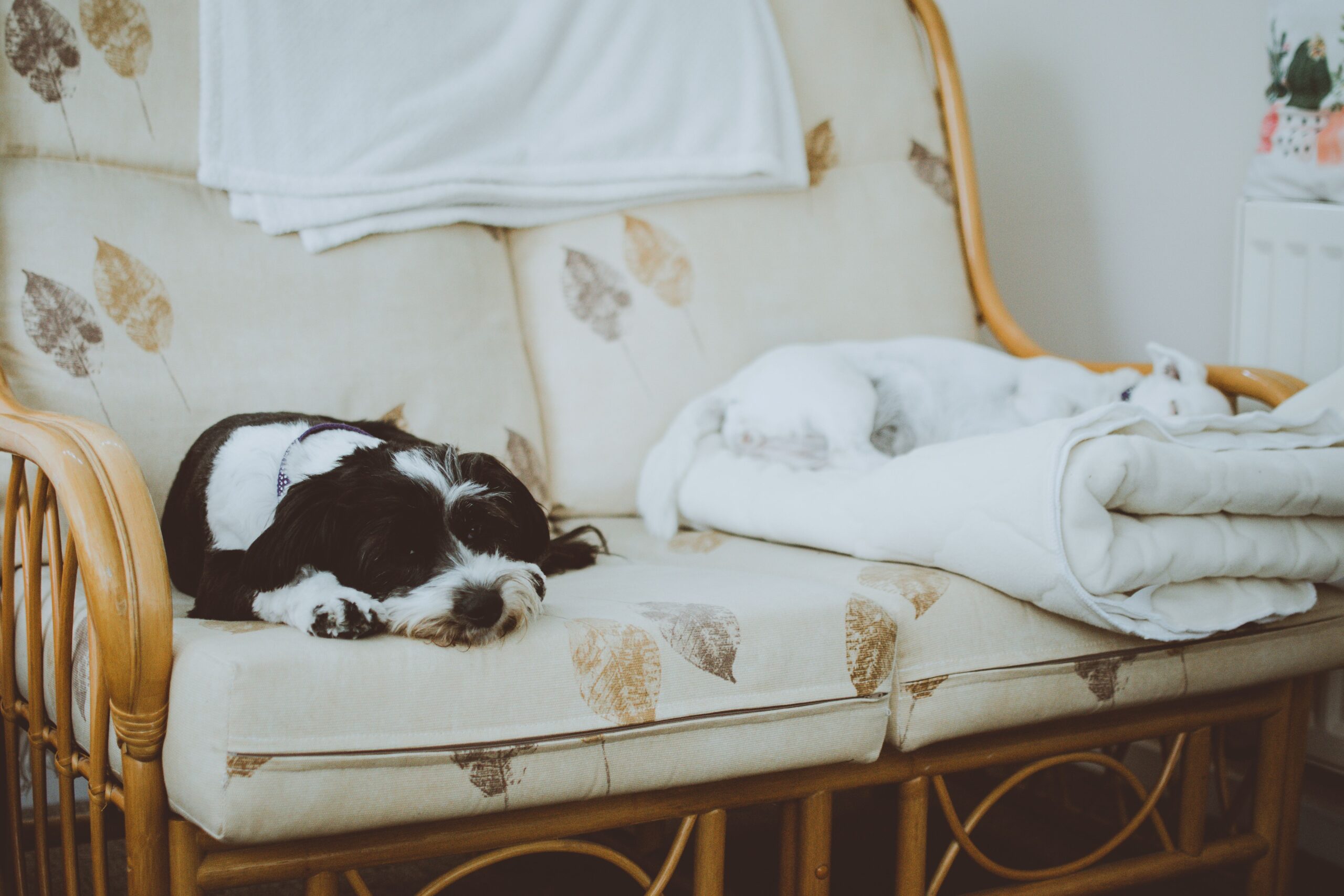
Choose Colors and Patterns That Hide Fur
Match your furniture color to your pet, not against it. A black cat and a charcoal sofa are a losing combination, as are a golden retriever and a navy couch. Choose a shade that blends with your pet’s coat so shed hair is less visible between cleanings. Subtle patterns and textured weaves (as long as they’re tight) hide both fur and minor stains far better than solid, dark, or very light colors. This one choice can cut how often your living room looks messy in half, without any extra cleaning.
The same logic applies to rugs and throws. A low-pile, patterned rug in a fur-friendly color disguises shedding and is easy to vacuum, while a plush white shag becomes a full-time job. Small rooms show mess more, so this matters even more in tight quarters.
Prioritize Easy Cleaning and Durability
In a small space, cleaning has to be quick or it won’t happen. Choose pieces you can wipe down or vacuum in seconds, with cushions that unzip for washing. Stain-resistant and water-repellent treatments (many performance fabrics have these built in) turn an accident into a five-minute cleanup instead of a ruined sofa. Solid hardwood or metal frames outlast particleboard, which matters when a big dog leaps on and off daily. Spending a bit more on a durable frame now saves replacing wobbly furniture later.
Keep a washable throw over your pet’s favorite spot as a cheap first line of defense; it takes the wear and goes in the laundry while the sofa underneath stays protected. It’s the least glamorous but most effective pet-friendly furniture hack there is.
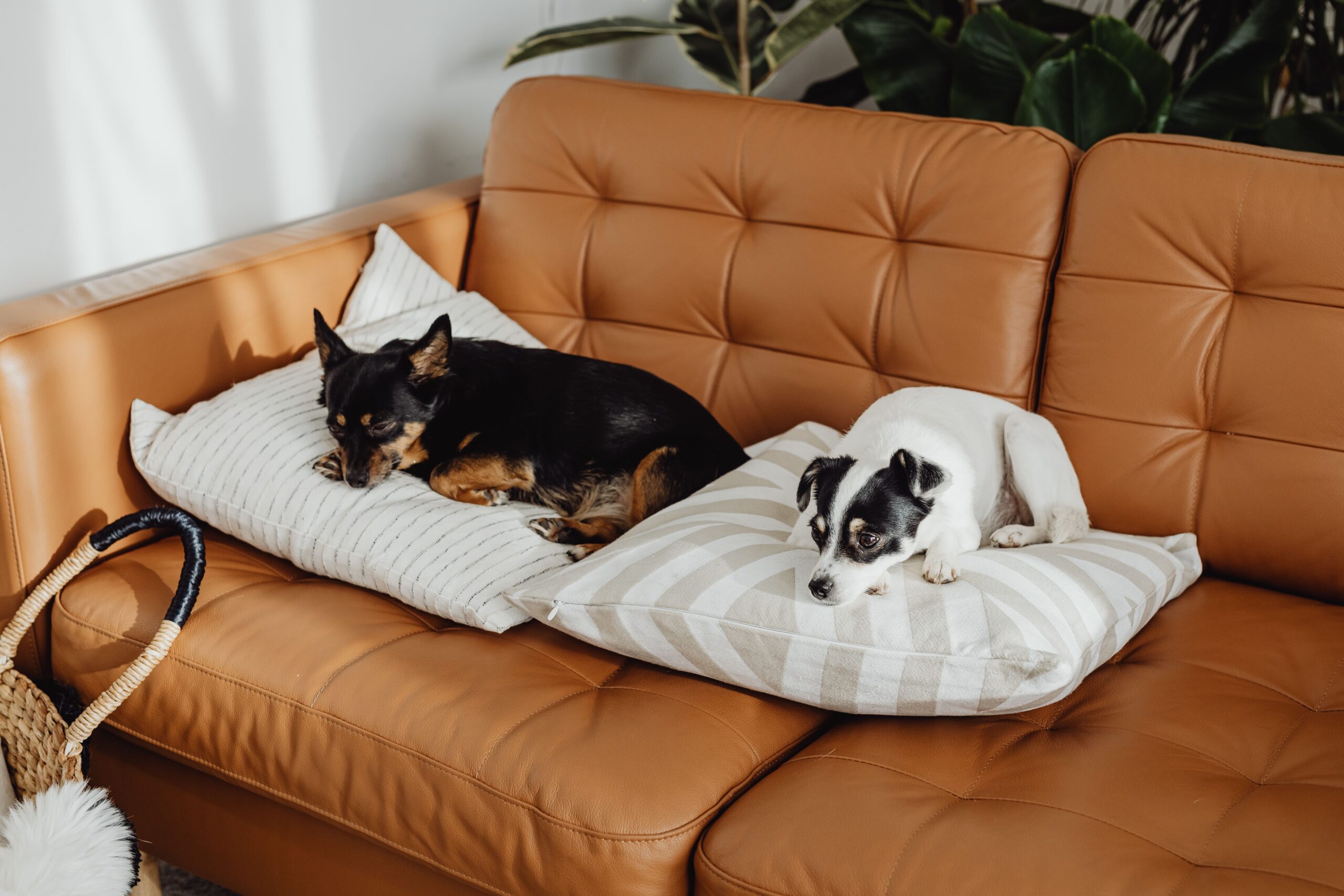
Pick Shapes That Save Space and Resist Damage
Shape matters as much as fabric in a small room. Choose furniture with legs rather than pieces that sit flush on the floor, since the gap underneath lets you vacuum trapped fur and gives a cat a hiding spot instead of clawing the base. Rounded arms with tight upholstery give cats fewer edges to scratch than exposed wooden corners. Multi-use pieces earn their keep: a storage ottoman hides pet toys and doubles as seating, and a sofa with a chaise gives your pet a dedicated end without adding a second piece of furniture to the room.
Measure carefully before buying. In a small living room, a slightly smaller sofa that leaves walking room feels far better than an oversized one crammed in, and it gives your pet floor space to stretch out. The same space-first thinking guides a good dog owner entryway setup just a few feet away.
Give Your Pet Its Own Spot
The best way to protect your furniture is to give your pet a better option nearby. A cozy bed placed next to the sofa, or a cat perch beside the window, gives your pet a designated resting place so it’s less inclined to claim the whole couch. Cats especially need a scratching surface right where they’re tempted to scratch the furniture; a post or cardboard scratcher next to the sofa redirects the behavior. When your pet has its own comfortable spot, your pet-friendly furniture lasts longer and stays cleaner.
This is the same principle that makes a calm pet-friendly bedroom work: give the animal a clear, comfortable place of its own, and it stops competing for yours. In a small home, those designated spots are what keep the shared space peaceful.
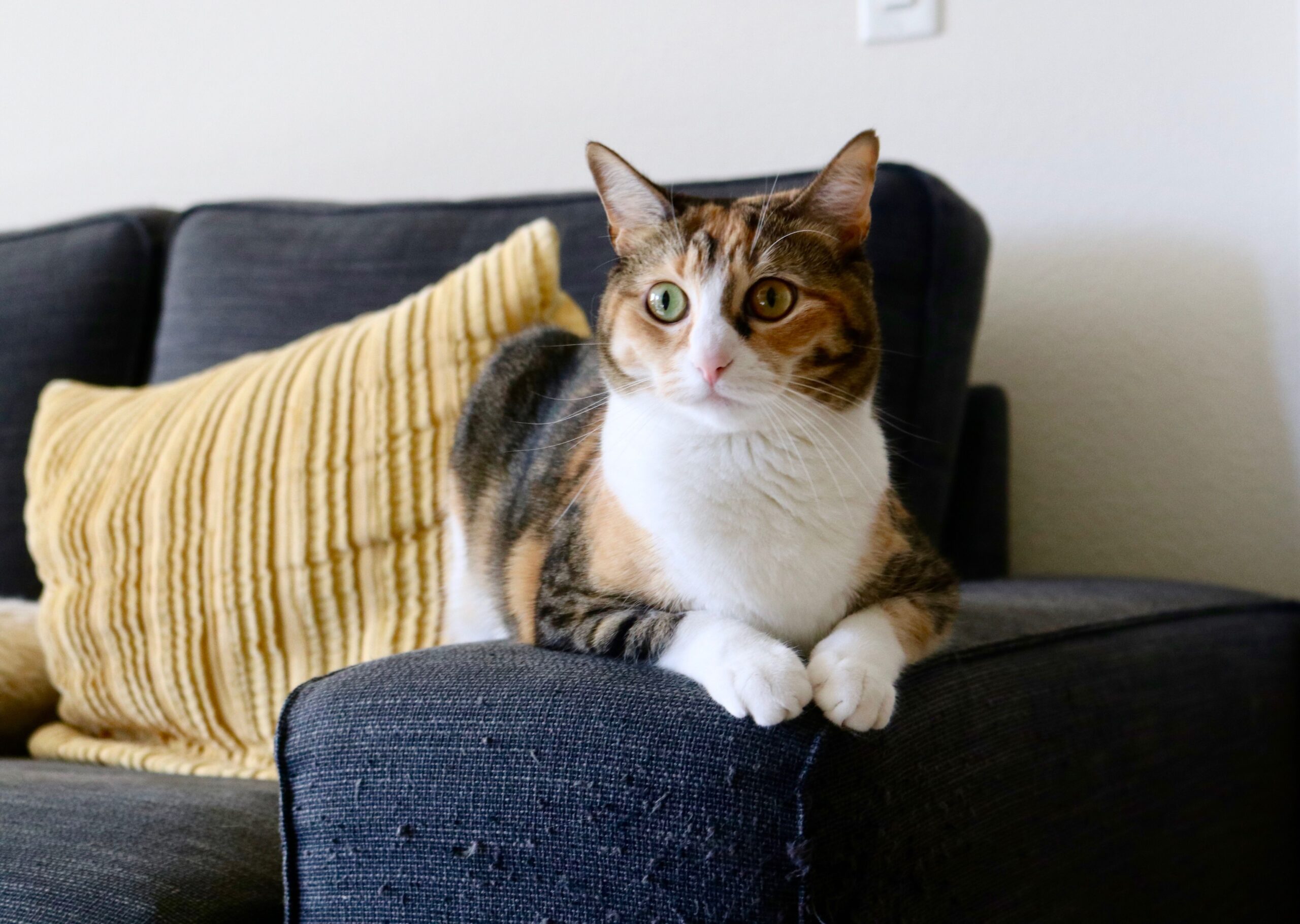
Budget Smart Without Sacrificing Durability
Pet-friendly furniture doesn’t have to be expensive. A quality slipcover ($30 to $80) transforms an existing sofa into a washable, protected one for a fraction of replacement cost. Secondhand solid-wood frames often outlast new budget pieces, and reupholstering a sturdy thrift find in performance fabric is a real option. Spend where it counts, on the frame and the fabric that take daily abuse, and save on decorative extras. Our guide to budget pet furniture covers smart swaps that beat pricey store buys.
Whatever your budget, choose safe materials. Avoid furniture treated with heavy chemical flame retardants or finishes your pet could lick, and skip pieces with small parts a pet might chew off. The ASPCA’s poison control resources can help you check materials, and the AVMA’s pet care guidance covers safe home environments.
Materials to Approach With Caution
Some popular furniture materials cause more trouble than they’re worth in a pet home. Sisal and rattan look great but read as one giant scratching post to a cat, so an exposed rattan chair rarely survives. Glass-topped tables show every nose print and paw smudge, turning a small room into a constant cleaning chore. Deep-tufted upholstery traps fur, crumbs, and dust in every button well, which is nearly impossible to vacuum out. And extremely light or extremely dark solid fabrics, as mentioned earlier, broadcast every hair. Knowing what to avoid saves you from an expensive mistake you’ll regret within a month.
That doesn’t mean these materials are off-limits forever; it means using them where your pet can’t reach or damage them. A glass shelf up high or a rattan basket out of a cat’s range can still bring the look you want without becoming a casualty. Match risky materials to low-contact spots and durable ones to the pieces your pet actually uses.
Protecting Furniture You Already Own
If replacing furniture isn’t in the budget, you can make what you own far more pet-friendly. Washable slipcovers and waterproof mattress-style protectors under a throw shield cushions from accidents and hair. Double-sided sticky tape or a cheap vinyl cat mat on the corners of a sofa deters scratching while you train your cat to use a nearby post. Furniture sliders let you move pieces easily to vacuum the trapped fur that always collects underneath. A lint roller and a rubber pet-hair brush kept in the living room make daily upkeep a thirty-second habit rather than a weekend chore.
Consistency is what preserves furniture in a small space, where there’s nowhere to hide the wear. A few protective layers plus a quick daily reset will keep even older pieces looking presentable, and it buys you time to save for the pet-friendly furniture you really want down the line.
Putting It All Together
Choosing pet-friendly furniture for a small living room comes down to a few clear rules: pick tightly woven or wipeable fabrics with washable covers, match colors to your pet’s coat, favor durable frames and space-saving multi-use shapes, and give your pet its own spot so it leaves yours alone. None of this requires a big budget or a big room; it just requires choosing each piece with your actual pet in mind. Do that, and your small living room stays comfortable, clean, and genuinely enjoyable to share.

Fernanda Amaral writes about making small homes work for pets and their humans — apartment-friendly setups, budget care and organization that actually fits. She shares practical tips tested in real small spaces.