
The first week I brought Biscoito home to my 38-square-meter studio, he spent most of it perched on the windowsill glaring at the pigeons and, I swear, judging my life choices. I worried constantly that one open room simply wasn’t enough for a cat. But two years later he’s a relaxed, chatty, thoroughly spoiled little tyrant who has claimed every square inch as his own. An indoor cat in a studio apartment can be genuinely happy, and it has far more to do with how you use the space than how much of it you have.
If you’re renting a small place and wondering whether you’re being unfair to your cat, this is for you. I’ll walk you through the vertical space, enrichment, routine, and small tweaks that turned my one-room apartment into a home a cat actually thrives in, without expensive renovations or landlord-angering drilling.
Why cats do fine in small spaces (when you get it right)
Cats don’t measure their territory in floor area the way we do. They think in three dimensions and in zones. A studio can hold a surprising number of distinct “places” to a cat: a warm sleeping spot, a lookout, a hiding cave, a feeding station, and a bathroom, all in the same room we’d call cramped. The trick to keeping an indoor cat happy in a studio apartment is to make those zones feel separate even when they share the same four walls.
Research from feline behavior specialists consistently points to environmental enrichment, not raw space, as the biggest driver of indoor cat welfare. In other words, a bored cat in a big house is worse off than a stimulated cat in a small one. That’s genuinely good news for studio dwellers. For an indoor cat in a studio apartment, steady enrichment matters far more than floor space.
Go vertical: the single biggest upgrade for a studio cat
When you can’t spread out, you build up. Vertical territory is the most valuable thing you can give an indoor cat in a studio apartment, because it multiplies usable space without touching your floor plan. A tall cat tree, a few wall-mounted shelves, or even a cleared bookshelf top gives your cat lookout points and a sense of control over the room.

For renters, I lean on freestanding and tension-mounted options so nothing needs drilling. A sturdy floor-to-ceiling cat tree runs about $40 to $90 and leans into a corner you’re probably not using anyway. Tension-pole systems and stick-on window perches ($15 to $30) give you height without a single screw. Put at least one perch near a window so your cat can watch the street; that “cat TV” does more for daytime enrichment than any toy.
Create separate zones in one room
Even in a single room, your cat wants to eat, sleep, and use the litter box in different places. The instinct is hardwired: in the wild, no cat eats where it eliminates. So spread these functions to opposite corners as much as your layout allows.
- Sleeping zone: a soft bed or covered cave in a quiet corner away from foot traffic.
- Feeding zone: food and water on the opposite side from the litter box, ideally raised slightly off the floor.
- Bathroom zone: the litter box as far from food and bed as the room allows, tucked behind furniture for privacy.
- Lookout zone: a window perch or tall shelf for surveying the room.
- Play zone: a clear stretch of floor for wand-toy chase sessions.
You don’t need walls to divide these; a bookshelf, a rug, or the back of the sofa is enough of a visual boundary to signal “this is a different place” to a cat.
Enrichment and play beat square footage
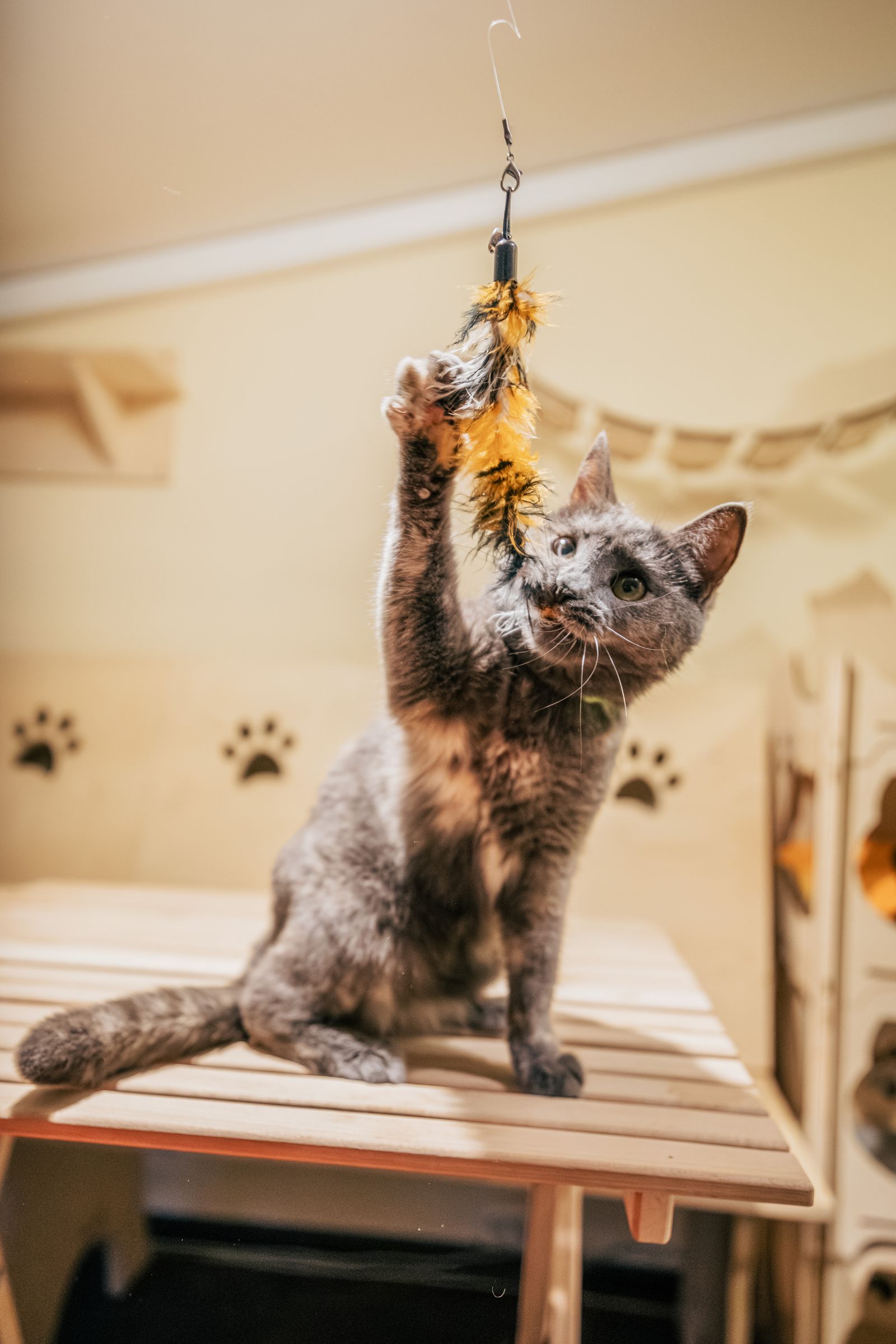
The number one cause of behavior problems in an indoor cat in a studio apartment is boredom, and boredom is completely fixable in a studio. Two short play sessions a day, five to ten minutes each with a wand toy, will burn off the energy that would otherwise become 3 a.m. zoomies across your bed.
Rotate toys instead of buying more
Keep most toys hidden in a drawer and put out just three or four at a time. Swap them every few days. To your cat, an old toy that vanished for a week is a brand-new toy when it reappears. This keeps clutter down in a small space and keeps interest high, for free.
Feed the hunter’s brain
Puzzle feeders and treat balls turn a 30-second meal into a 15-minute activity. You can buy them for $8 to $20 or make one from a cardboard box with holes cut in it. Scatter-feeding a portion of kibble across the floor also taps the natural foraging instinct and adds movement to your cat’s day.
Litter box strategy in a tiny footprint
The litter box is the make-or-break of studio cat life, because you live right next to it. Choose a covered or top-entry box to contain scatter and odor, and scoop twice a day without fail; in a small space there’s no hiding a neglected box. A furniture-style litter cabinet ($50 to $120) hides the box inside what looks like an end table and doubles as a surface. Get it right and the litter box stops being the downside of an indoor cat in a studio apartment.
Set the box as far from the food and sleeping areas as your room allows, and keep a small mat in front to catch tracked litter. If odor is a concern, an unscented clumping litter plus a scoop-twice-daily habit beats any heavily perfumed product, which many cats dislike anyway.
Routine and companionship
Cats crave predictability far more than variety. Feeding at the same times, playing before your own bedtime, and keeping a steady daily rhythm makes a small space feel secure. If you work long hours, consider whether a second cat would actually help; two bonded cats in a studio often keep each other company better than one lonely cat in a mansion. According to the ASPCA’s general cat care guidance, environmental enrichment and daily interaction are central to indoor cat wellbeing. A predictable rhythm is what keeps an indoor cat in a studio apartment feeling secure.
Leave a radio or low TV on when you’re out, and give your cat a window view for daytime stimulation. For deeper reading on feline behavior, the Humane Society’s cat behavior tips are a reliable, free resource.
Common studio-cat mistakes to avoid
Most struggles I hear about from other small-space cat owners come down to a handful of avoidable habits. The good news is that each one is easy to correct once you see it, and fixing them usually costs nothing.

- Skipping daily play. A studio cat has nowhere to roam, so if you don’t schedule play, that energy has nowhere to go and comes out as furniture-scratching or midnight sprints.
- Putting food next to the litter box. In a tight room it’s tempting, but cats find it genuinely stressful and may eat or eliminate less.
- Leaving the box uncovered by the bed. You’ll smell it and your cat wants privacy, so tuck it behind furniture or into a cabinet.
- Only offering floor-level space. Without a perch, a studio can feel like a fishbowl to a cat; height gives them somewhere to retreat and feel safe.
If you catch yourself doing one of these, don’t feel bad; every one of us has. I fed Biscoito next to his box for the first month before I learned better, and simply moving the bowls three feet across the room noticeably calmed his eating habits within days.
Keeping the peace with a landlord and neighbors
Studio living usually means thin walls and a lease with rules, so a happy cat is also a quiet, non-destructive one. Trim your cat’s nails every couple of weeks and provide a scratching post right where they already like to scratch, which protects both the sofa and your security deposit. A cardboard scratcher costs about $6 to $12 and saves far more in potential damage. Redirected scratching keeps an indoor cat in a studio apartment from targeting your furniture.
Excess meowing at night is almost always a sign of pent-up energy or hunger timing, so a solid evening play session followed by the last meal of the day settles most cats right down. Keep these small courtesies up and nobody, human or feline, has anything to complain about.
Final thoughts
For a truly content indoor cat in a studio apartment, start small. You don’t need a big home to give a cat a great life. Build upward, carve out clear zones, keep the enrichment coming, and stay consistent with the litter box and routine. Do those things and your studio becomes plenty of world for one contented cat. Start this week with just one change, add a vertical perch by a window, and watch how quickly your cat claims it as the best seat in the house.
Related reading
- How to Keep a Small Apartment From Smelling Like Your Pets
- The Realistic Guide to Litter Box Placement in a Small Apartment
- How to Manage Dog Barking in a Thin-Walled Apartment

Fernanda Amaral writes about making small homes work for pets and their humans — apartment-friendly setups, budget care and organization that actually fits. She shares practical tips tested in real small spaces.