
Pets accumulate gear that only matters for part of the year: winter coats and sweaters, cooling mats and summer travel kit, holiday costumes, thick and thin bedding. In a house you’d stash it in a basement, but in an apartment there is no basement — just the same crowded closet all year. Smart seasonal pet gear storage solves this by keeping only the current season’s items in reach and tucking the rest away compactly. This guide shows how to rotate, shrink and store it all without losing a square foot you can’t spare.

Why seasonal rotation matters in an apartment
When every item your pet owns competes for the same shelf, the things you use daily get buried behind things you need twice a year. Rotating gear by season means your active items stay accessible while off-season pieces move to dead space you’re not otherwise using. Good seasonal pet gear storage doesn’t require more room — it requires using your existing room more deliberately. The payoff is a closet you can actually see into and a feeding or entry zone that isn’t perpetually cluttered.
Rotation also protects your gear. Coats and cooling mats left crammed in a shared closet get crushed, snagged and dusty; stored properly for their off-season, they last far longer. That longevity matters on a budget, because gear you don’t have to replace every year is money back in your pocket. Think of a rotation system as both a space-saver and a way to make your pet’s things last.
Sort gear into season-based groups
Start by pulling everything out and grouping it: winter (coats, sweaters, warm bedding, ice-safe paw balm), summer (cooling mat, life vest, travel kit, lightweight bedding), and all-season (everyday leash, bowls, brush). Be honest and cull as you go — anything outgrown, damaged or never used shouldn’t go back into storage at all. If decluttering is where you’re starting, our guide on decluttering pet stuff your pet never uses pairs perfectly with a seasonal reset.
When you set up your storage zones, keep safety in mind too — bins shouldn’t block vents, exits or anything your pet could knock over. A quick pass to make sure the space stays pet-safe is worth it; our apartment pet-proofing checklist is a handy reference while you rearrange closets and under-bed areas.
Shrink bulky items with the right containers
Bulk is the enemy of apartment storage. Compress soft items — winter bedding, sweaters, plush toys — into vacuum bags or compression sacks, which can cut their volume by half or more. Store the flattened bundles in labeled bins sized to your available space. Clear bins let you see contents; opaque ones look tidier on open shelves. Effective seasonal pet gear storage leans hard on compression, because soft goods are exactly what eat the most room when left loose.
One caution with vacuum bags: don’t compress items with foam or structured padding, like orthopedic beds, since compression can permanently damage the fill. Save the vacuum bags for flat, floppy items — blankets, sweaters, soft toys — and store structured pieces loosely in a bin instead. Matching the storage method to the item keeps everything usable when its season returns.
Stackable bins with flat lids beat rounded totes in a closet, since they use vertical space efficiently and won’t topple. Measure your shelf height and the under-bed clearance before buying containers — a bin an inch too tall for the space it’s meant for is a frustration you’ll notice every time you use it. A few minutes with a tape measure saves a return trip to the store.
Use the dead space you already have
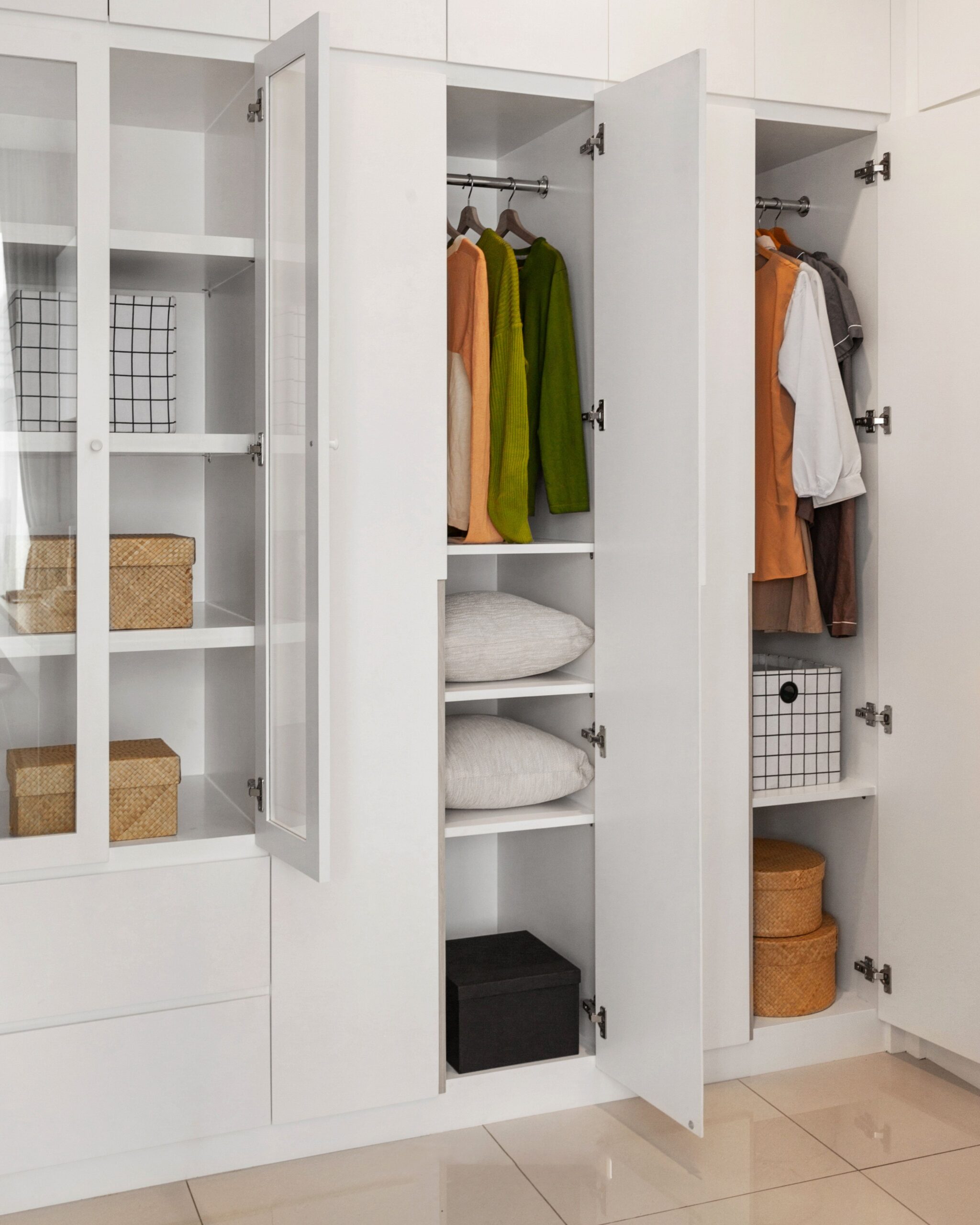
Every apartment hides storage if you look. Under-bed boxes on wheels swallow off-season bedding; the top shelf of a closet or the gap above a wardrobe holds bins you only reach twice a year; a storage ottoman doubles as seating and a gear chest. Behind-the-door organizers and the sides of a fridge or washer are options too. For more ways to squeeze storage from a tiny closet, our post on organizing pet supplies in a tiny closet is full of usable ideas.
Prioritize spots by how often you’ll reach them. The under-bed box you’ll open twice a year can go to the far, awkward corner, while the current season’s bin belongs somewhere you can grab without moving three other things. Matching access frequency to location is the quiet secret that makes a small-space system feel effortless rather than like a daily obstacle course.
Label everything clearly
Six months later you won’t remember which identical bin holds the winter coat. Label every container by season and contents — a piece of tape and a marker is enough. Add a quick inventory list inside the lid for bins packed deep in dead space, so you can check what’s inside without unstacking everything. Clear labeling is the difference between seasonal pet gear storage that works and a pile of mystery boxes you’re afraid to disturb.
Color-coding takes labeling one step further and costs almost nothing. Assign winter one color of tape or bin and summer another, and even a glance from across the room tells you which box is which. In a shared household, this also means anyone can put gear back in the right place, so the system doesn’t quietly fall apart the moment you’re not the one tidying.
Store gear so it stays in good shape
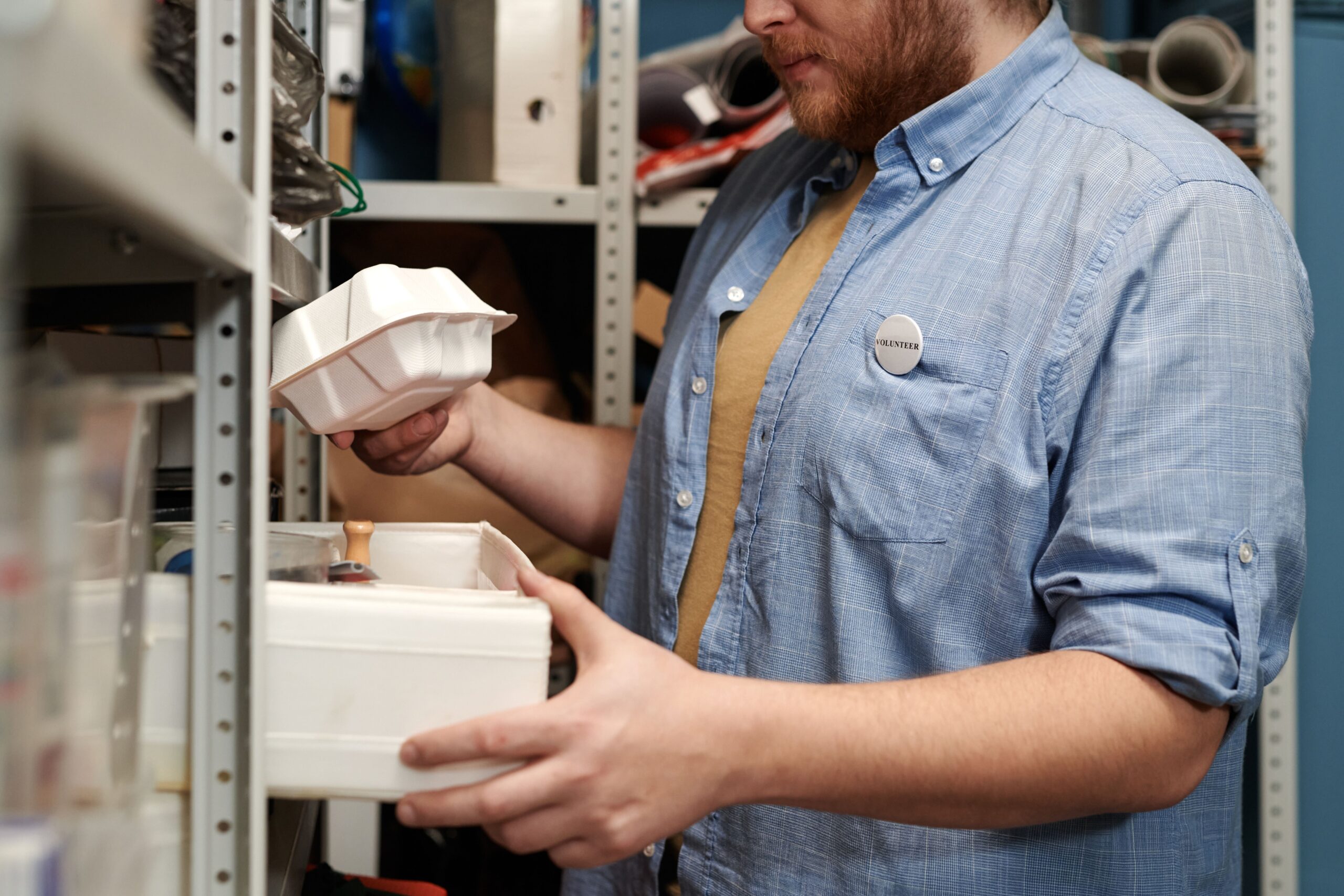
Off-season storage should protect your gear, not ruin it. Wash and fully dry everything before packing, since food residue, dampness or pet dander invite pests and mildew over months in a bin. Add a cedar block or a few silica packets to soft-goods bins to fight moisture and odor. Keep anything a pet might chew or ingest sealed away; the ASPCA’s poison-control resources are a good reference for materials and products to keep out of reach.
Humidity is the other enemy of long-term storage. Apartments near kitchens and bathrooms can trap moisture, so avoid storing fabric gear directly against exterior walls that get cold and damp. If your space runs humid, a small reusable dehumidifier packet in each soft-goods bin goes a long way toward keeping everything fresh until its season comes back around.
Make the seasonal swap a quick ritual
Twice a year — spring and fall — do a fifteen-minute swap: pull the incoming season’s bin to the accessible shelf, pack the outgoing gear the same way, and cull anything worn out. Tie it to another seasonal task, like changing your own wardrobe, so you don’t forget. This tiny routine keeps your seasonal pet gear storage system self-maintaining instead of collapsing back into one chaotic pile by year’s end.
Set a recurring reminder on your phone for the two swap dates if a routine doesn’t stick naturally. Pairing the task with a fixed calendar event — the first weekend of spring, the first cool weekend of fall — removes the decision of when to do it, and removing decisions is what keeps small habits alive over the long term.
The bottom line on seasonal pet gear storage
No basement, no problem. Group gear by season, compress the bulky soft items, exploit under-bed and overhead dead space, label everything, and protect what you pack. Add a fifteen-minute twice-yearly swap and your apartment gains breathing room without an inch of extra square footage. Done right, seasonal pet gear storage keeps daily life uncluttered and every piece of your pet’s gear ready the moment its season comes around.
Best of all, this is a one-time setup that pays off indefinitely. Buy the bins and compression bags once, sort and label once, and from then on you’re only doing quick swaps. For an apartment dweller who feels their pet’s gear has taken over the place, few small projects deliver as much reclaimed calm and space for so little ongoing effort.

Fernanda Amaral writes about making small homes work for pets and their humans — apartment-friendly setups, budget care and organization that actually fits. She shares practical tips tested in real small spaces.