
Traveling with a pet from a small apartment poses two challenges at once: you need everything your animal requires, and you have nowhere to keep the gear between trips. A bulky carrier, a folding crate, food, meds and toys can swallow a closet you don’t have. The solution is a system to store and pack pet gear that stays compact at home and assembles fast when it’s time to go. This guide covers how to pack pet gear efficiently and where to stash it the other fifty weeks of the year.
The mindset shift that makes this work is treating travel gear as a single kit rather than a pile of separate objects. When everything lives together in one defined container and returns to that same container after every trip, the gear stops competing with the rest of your belongings for space. That one habit is what turns a cramped apartment into a place you can comfortably travel from.

Start with a master packing list
Guessing leads to forgotten meds and last-minute panic. Build one reusable checklist covering food and a collapsible bowl, water, medications, waste bags, a leash or harness, a familiar toy or blanket, vaccination records, and the carrier itself. Keep the list taped inside the bin where you store and pack pet gear, or saved on your phone, so every trip starts from the same baseline. A list also stops you from over-packing, which is the enemy of a small-space traveler.
Keep the checklist short and specific rather than aspirational. A list of twelve real items you actually use beats a sprawling one you ignore. When the same compact list guides how you store and pack pet gear every single trip, packing becomes muscle memory and the odds of forgetting something important drop close to zero.
Review the list after each trip and cut anything you carried but never used. Most owners pack two or three “just in case” items every time that never come out of the bag. Trimming those keeps the kit genuinely small, and a smaller kit is easier both to store and to carry through an airport or into a hotel.
Choose collapsible, dual-purpose gear
In a small home, gear that folds or nests is worth paying for. A soft-sided carrier that flattens, silicone bowls that collapse to disc-thin, and a fabric crate that folds to a few inches all reclaim shelf space. Choose items that do double duty — a carrier that doubles as a bed, or a tote that becomes a car barrier. The less rigid, single-use gear you own, the easier it is to store and pack pet gear without a dedicated closet.
Create a grab-and-go travel kit
Keep the small, trip-critical items pre-packed in one zippered pouch year-round: spare waste bags, a folding bowl, a few pieces of kibble, wipes, and a copy of vaccination records. When a trip comes up, that pouch is already done and you only add fresh food and meds. This mirrors the logic of an emergency kit; our guide to building a pet first-aid kit for under $25 pairs perfectly with a travel pouch so both live together.
Keeping the pouch by the door, or clipped to the leash you grab on the way out, means it travels with you automatically. The same entryway thinking that keeps daily walking gear tidy applies here; our guide to leash and gear organization for narrow entryways shows how to give the grab-and-go pouch a permanent home that doesn’t clutter your doorway.
Store the bulky items smart
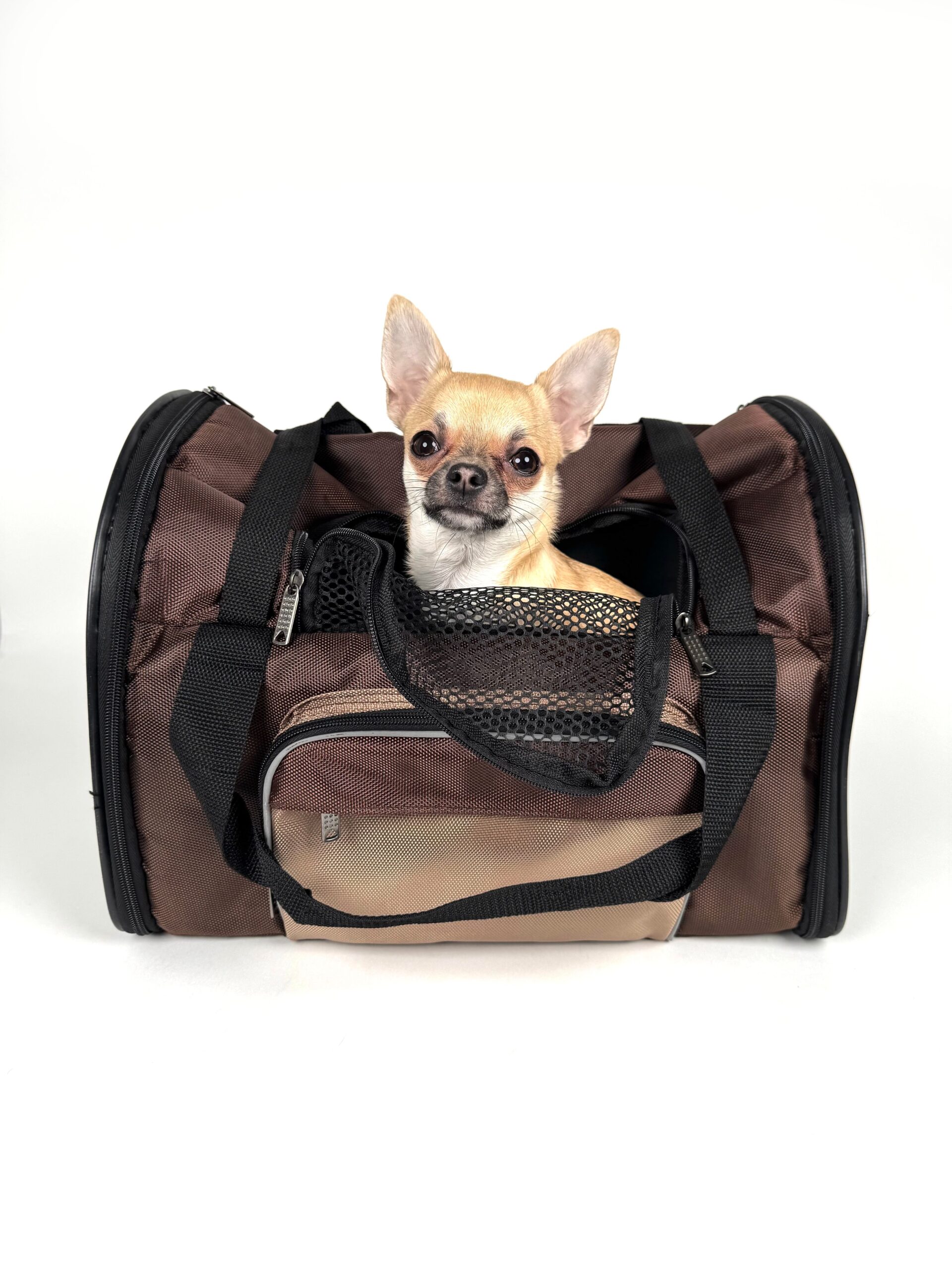
Carriers and crates are the space hogs. Store a folded soft crate flat under the bed or on top of a wardrobe, and use a hard carrier as a storage container itself — fill it with the rest of the travel gear so it isn’t wasting hollow space. Vacuum-style bags shrink soft bedding for storage. If you’re short on closet room generally, the ideas in our post on organizing pet supplies in a tiny closet apply directly to travel gear too.
Think vertically for the biggest items. The top shelf of a closet, the space above a wardrobe, or a slim gap beside the fridge can all hold a flattened crate that would otherwise dominate floor space. Because these items only come out a few times a year, it’s fine to put them in the least convenient spots — save the reachable shelves for the gear you use often when you store and pack pet gear for frequent short trips.
Label everything. A strip of tape marking “travel only” on a bin or bag stops travel gear from being raided for everyday use and then going missing right before a trip. Clear bins let you confirm contents at a glance, and stacking them by frequency — the pouch you grab often on top, the crate you rarely need at the bottom — keeps the system efficient in a tight closet.
Pack food and water the compact way
Food is heavy and bulky, so portion it. Pre-measure meals into small zip bags or a single stackable container rather than hauling the whole bag. Freeze water in a spill-proof bottle so it doubles as cooling on the road and thaws to drinking water. Bring a bit more food than the trip needs in case of delays, but resist packing the entire bag — pre-portioning is the single biggest space saver when you store and pack pet gear for a trip.
For longer trips, a single airtight food container with a twist lid beats a floppy bag every time — it won’t spill in transit and it stacks neatly in the car or under a train seat. Freeze a couple of meals ahead if you’ll have a cooler, and always keep the feeding schedule consistent, since travel is stressful enough for a pet without changing when and how they eat.

Keep documents and meds together
Nothing derails a trip like a missing health certificate. Keep a slim folder or a phone folder with vaccination records, your vet’s contact, microchip number, and a recent photo of your pet in case they get lost. Store medications in a small labeled case with dosing notes. Requirements vary by destination and airline, so check well ahead; the AVMA maintains helpful traveling-with-pets guidance on documents and safety.
Make the return unpack part of the system
The system fails if gear scatters when you get home. Unpack straight back into the same bin: refill the grab-and-go pouch, wipe down the carrier, and note anything you ran low on so you restock before the next trip. Five minutes of resetting keeps everything ready and prevents the slow creep of travel clutter into your small space between adventures.
Give yourself a two-minute pre-departure ritual, too: run a finger down the checklist, confirm meds and records are in, and do a final headcount of the bulky items. This tiny habit catches the one forgotten thing that would otherwise turn into an expensive mid-trip purchase, and it makes the whole process of getting ready feel controlled rather than frantic.
The bottom line on small-space pet travel gear
You don’t need a garage or a spare room to travel well with a pet — you need a compact, repeatable system. Work from a fixed checklist, buy collapsible dual-purpose gear, keep a year-round grab-and-go pouch, store bulky items smart, and reset the moment you return. Do that, and packing for the next trip drops from a stressful scramble to a five-minute task, no matter how small your home.
One final note: the first time you build the kit takes an afternoon, but every trip after that is nearly effortless. That upfront investment is what makes it realistic to store and pack pet gear in an apartment where space is genuinely scarce. Get the system right once, and traveling with your pet stops feeling like a reason to stay home.

Fernanda Amaral writes about making small homes work for pets and their humans — apartment-friendly setups, budget care and organization that actually fits. She shares practical tips tested in real small spaces.